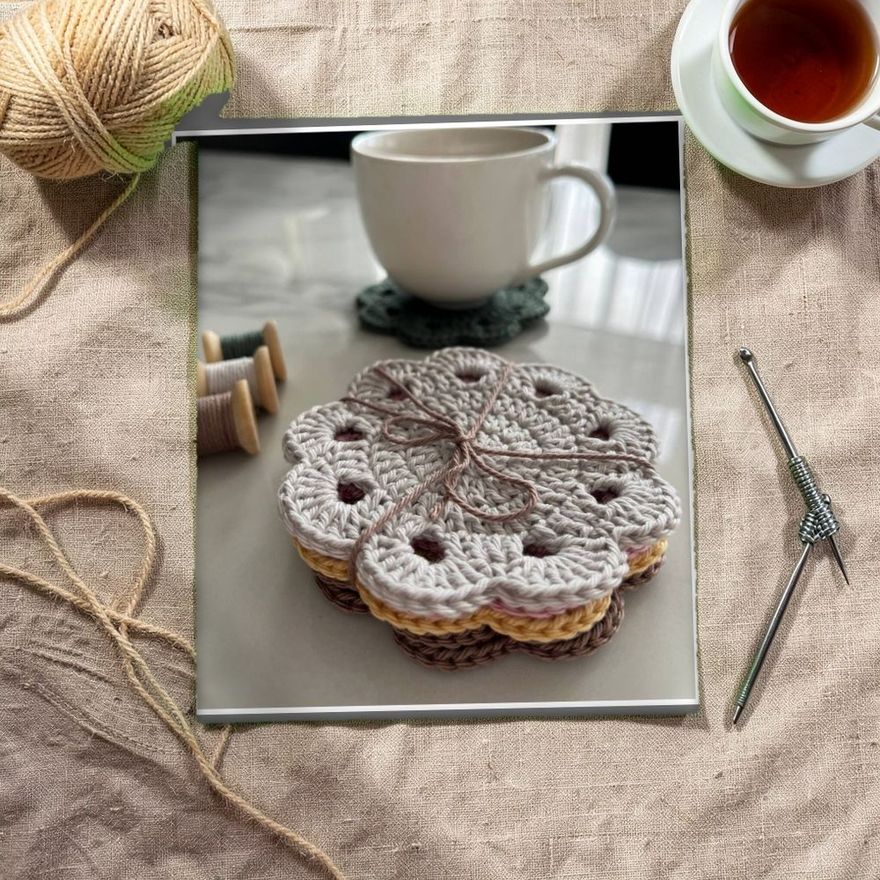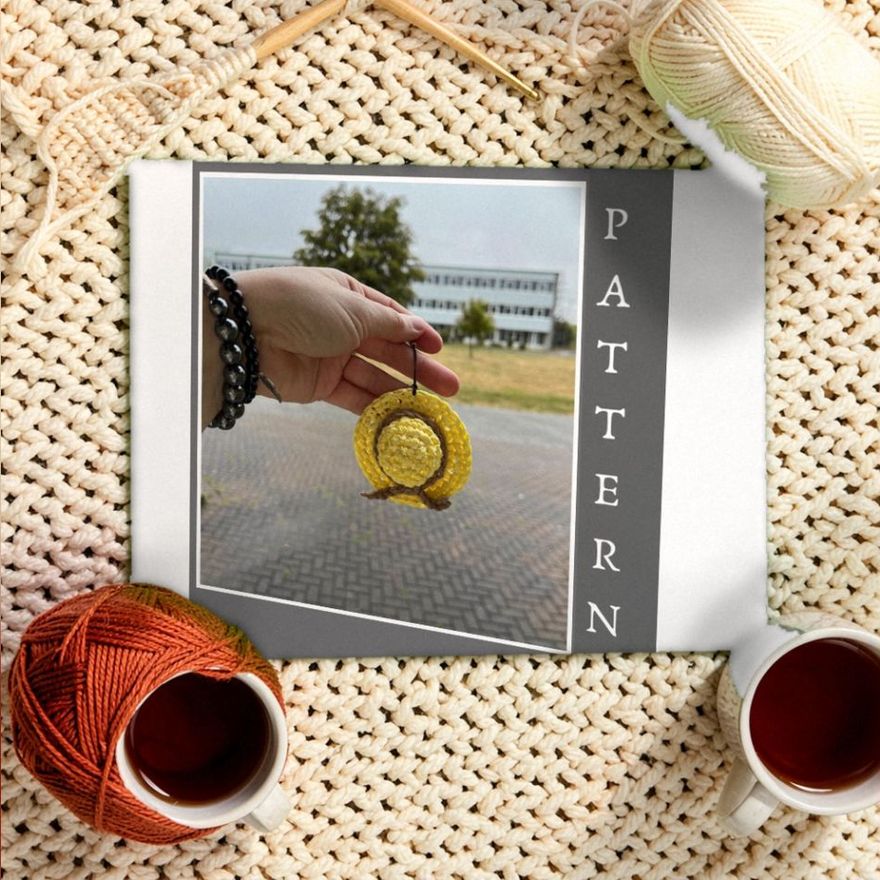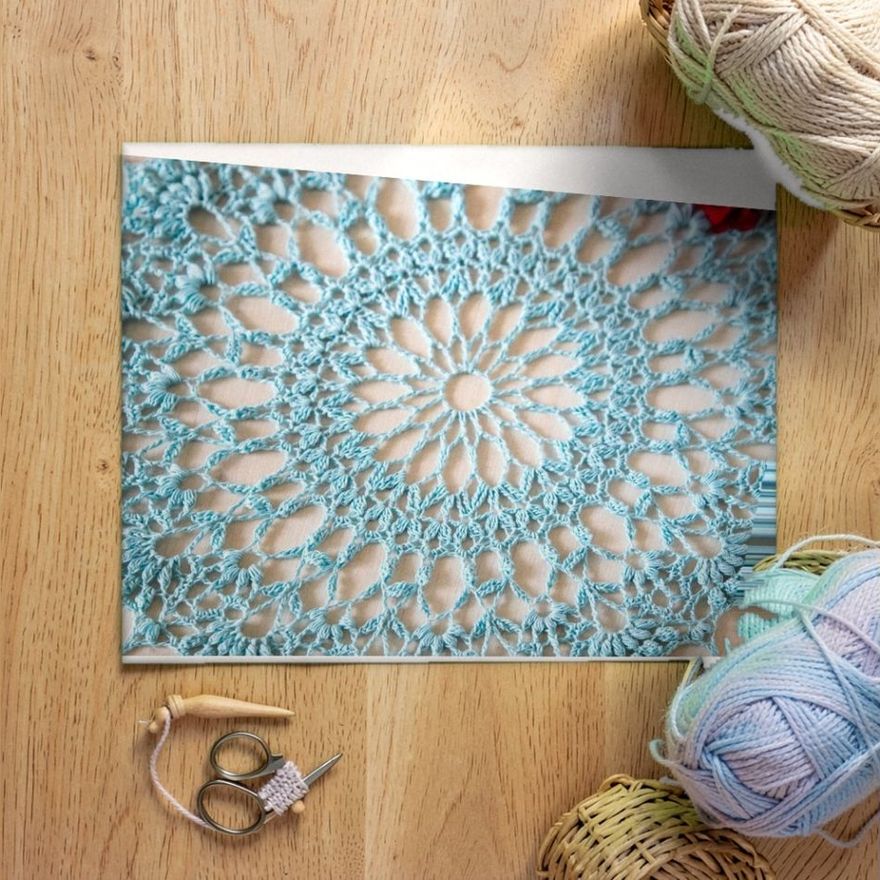
Five shapes cover most crochet Christmas decorating: snowflakes, stars, trees, candy canes and garlands. Most ornaments take an hour or two at most, so the crocheting is the easy part. What needs planning is the material, since lace snowflakes want thread and stuffed shapes want yarn, and the finishing, since stiffening and drying take longer than people expect. Start in October and you have time for both.
The Five Classic Shapes
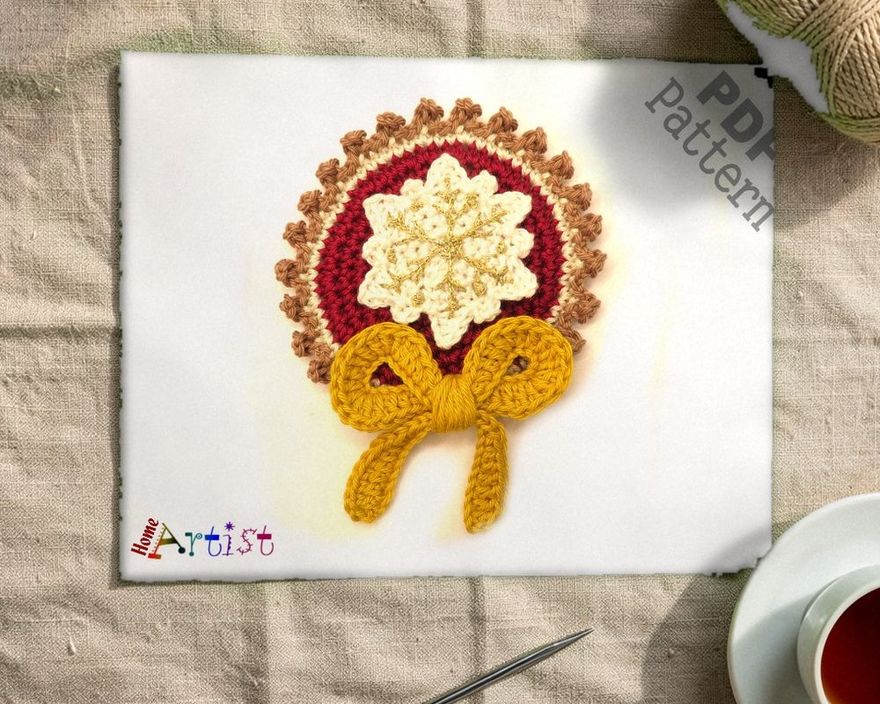
Snowflakes. Worked in rounds from a small ring, with everything in multiples of six, because a snowflake has six arms. They are mostly chains and picots, so they are limp off the hook and only become snowflakes once they are stiffened and pinned out.
Stars. Five points around a small circle. A single flat star in thread is lace and is treated like a snowflake. Two flat stars in yarn, joined around the edge with a little stuffing between them, make a soft ornament that needs no stiffening.
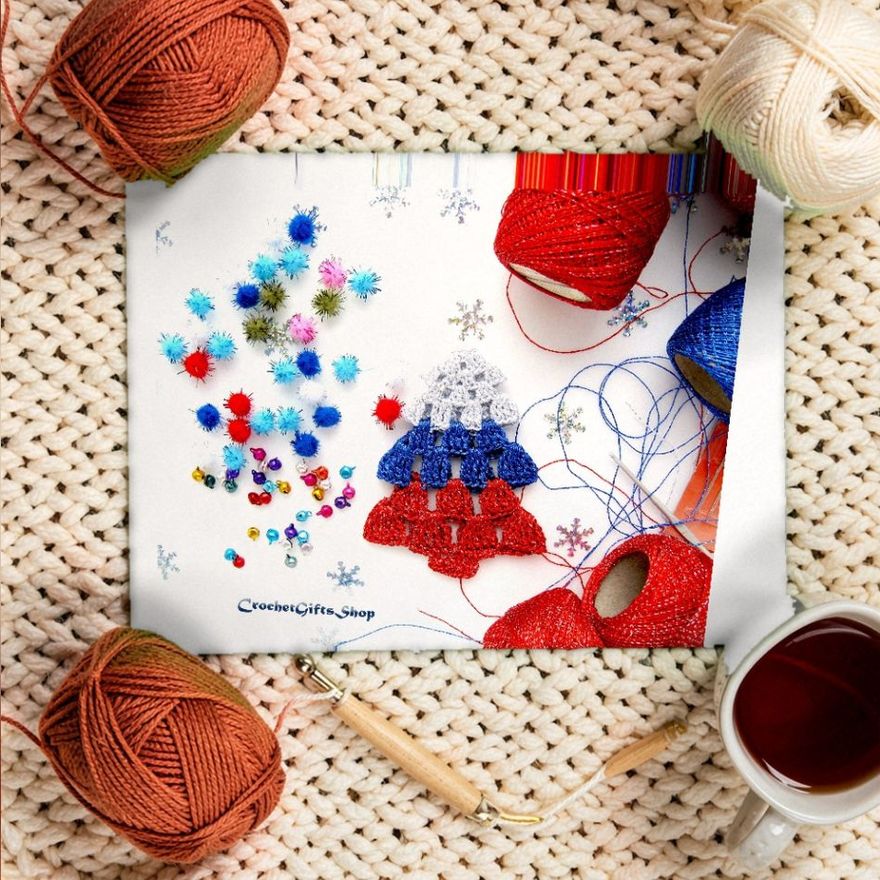
Trees. The simplest is a flat triangle worked in rows, with a few chains for a trunk. Others are a stuffed cone worked in a spiral, or tiers of ruffles. Beads or French knots stand in for baubles.
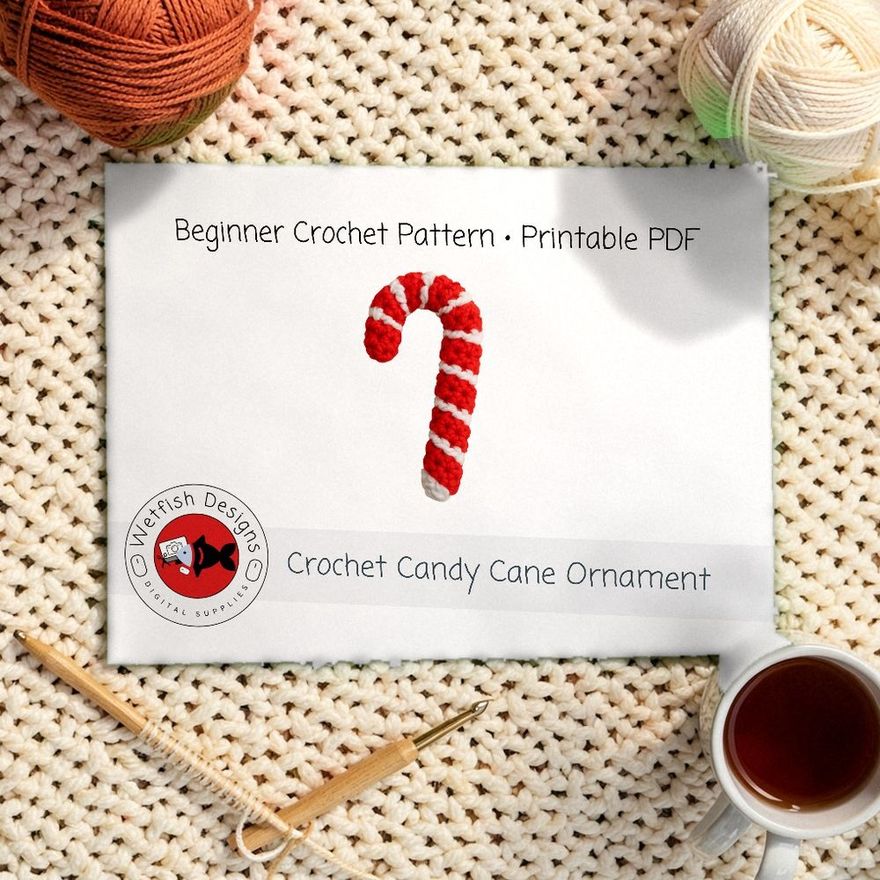
Candy canes. A narrow strip or tube in red and white. A chenille stem slipped inside lets you bend the crook and keeps it bent. A flat one is stiffened instead.
Garlands. Small motifs on a crocheted cord, or flags joined along the top edge. A garland uses up the stars and trees you already know how to make.
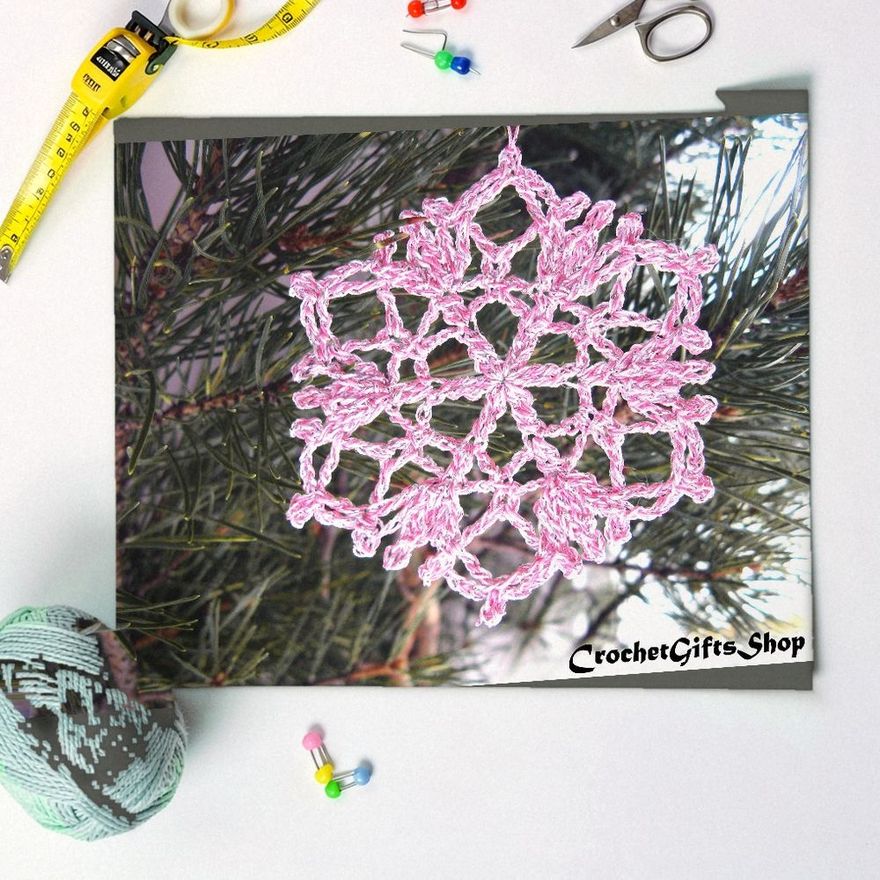
Here is one of each of the first three, to show the range before you choose:

Snowflake Ornament Crochet Pattern
See the listing ↗
Crochet Pattern Christmas Star Ornament
See the listing ↗
Christmas Tree Ornament Crochet Pattern
See the listing ↗From the collection Christmas Crochet. New Creative Fabrica members get 10 free downloads, and any of these can be one of them.
Thread or Yarn
The same pattern gives a very different object depending on what you make it in. Size 10 thread works up at about 32 to 42 stitches to 4 inches and worsted yarn at 11 to 14, so a snowflake that is 3 inches across in thread comes out roughly three times as wide in worsted, and far less crisp.
| Material | Hook | Suits | Stiffen it? |
|---|---|---|---|
| Size 10 cotton thread | US steel 7 (1.5 or 1.65 mm, depending on the brand) | Lace snowflakes and stars | Yes, always |
| Sport or DK cotton | 2.5 to 3.5 mm | Flat ornaments, small stuffed shapes | Lightly, for flat pieces |
| Worsted cotton or acrylic | 3.5 to 4.5 mm (E-4 to 7) | Stuffed ornaments, trees, garlands | No |
Size 10 is the standard crochet thread, the one sold as bedspread weight. Thread sizes run from 3 to 100 and higher numbers are finer, with 3, 5, 10, 20 and 30 the ones you will find in a craft store.
Steel hooks are numbered backward: the higher the number, the smaller the hook. Aunt Lydia's Classic 10, a widely sold thread that comes in balls of 300 to 400 yards depending on the color, names a steel 7 on its label, and the Craft Yarn Council's range for this thread is steel 6 to 8. Brands do not agree on what a 7 measures, so go by the millimeters stamped on the hook. If you have not used thread before, the hook feels tiny for the first evening and normal by the second. White and ecru are traditional for snowflakes, and they show the stitch pattern best.
For sparkle, use a thread that already has a metallic filament twisted in. Pure metallic threads can be scratchy and harder to work, so make a small sample before you plan a dozen ornaments in one.
As with any stuffed piece, use a hook smaller than the yarn label suggests, so that no filling shows between the stitches.
A Making Timeline From October
Drying is the bottleneck. You can crochet several snowflakes in an evening, but each stiffened batch takes up your pinning surface for 24 to 48 hours.
| When | What to do |
|---|---|
| Early October | Choose two or three shapes. Buy thread, stiffener and rust-proof pins. Make one of each as a test and hang it on a doorknob to judge the size. |
| Mid to late October | Crochet the flat pieces in batches and weave in the ends as you go. |
| Early November | Stiffen and block, one board at a time. Leave each batch until it is fully dry. |
| Mid November | Make the stuffed ornaments and the garland. Add hanging loops. |
| Late November | Wrap the ornaments you are giving and mail the ones that travel. |
| December | Make extras: gift toppers, one more for a neighbor. |
How many is enough? Decorators' rule of thumb is 10 to 15 ornaments per foot of tree height for a full look, and 10 to 20 in all for a tabletop tree under 3 feet. So a dozen snowflakes fill a small tree on their own, and on a 6 or 7 foot tree, which carries 60 to 100 ornaments, a dozen in one style still reads as a theme among your usual decorations.
Stiffening and Blocking
Thread lace has to be stiffened or it hangs like a wet leaf. The short version: soak the piece in stiffener, press out the excess, and pin it over a template covered in plastic wrap. For a snowflake, the template is six lines meeting at the center at equal angles. Pin the center, then the tip of each arm on its line, then the small picots.
Use rust-proof pins; stainless steel T-pins are the usual choice. Ordinary pins rust in wet stiffener and leave brown marks on white thread.
The choice of stiffener, and how firm each one dries, is covered in how to block and stiffen crochet. Flat ornaments in yarn need only blocking, with a light starch if you want the points sharp. Stuffed ornaments need nothing.
Hanging Loops
Add the loop after stiffening. A loop crocheted as part of the piece goes rigid with the rest and tends to sit at an odd angle.
- Thread or fine ribbon. Cut 7 to 8 inches, pass it through a chain space at the top of the ornament and knot the ends. That gives a loop of about 3 inches, enough to slide over a branch.
- Clear nylon thread. The ornament appears to float. Knot it twice, as nylon slips.
- A wire ornament hook. Slip it through a top stitch. This is the quickest way if you are finishing thirty at once.
Hang a snowflake from the tip of one arm, where there is a picot or chain loop to pass the thread through. For stuffed ornaments, anchor the loop through two stitches and bury the knot inside.
Keep them light. A heavily stuffed ornament pulls a branch down, so stuff only until the shape holds.
Garlands
Hang a piece of string the way you want the garland to hang, swags included, and measure the string. A crocheted chain makes the cord. Make it in the same yarn held double, or work a row of slip stitches back along the chain, so that it does not stretch thin under the weight.
Space the motifs 4 to 6 inches apart. A 6-foot cord with a motif every 6 inches takes about a dozen. You can crochet the motifs onto the cord as you go, joining each with a slip stitch through its top, or sew them on at the end, which makes the spacing easier to adjust.
Small flat motifs are ideal here, and our crochet applique patterns include several Christmas sets:

Christmas Set 1 Crochet Applique Pattern
See the listing ↗
Christmas Set 4 Crochet Applique Pattern
See the listing ↗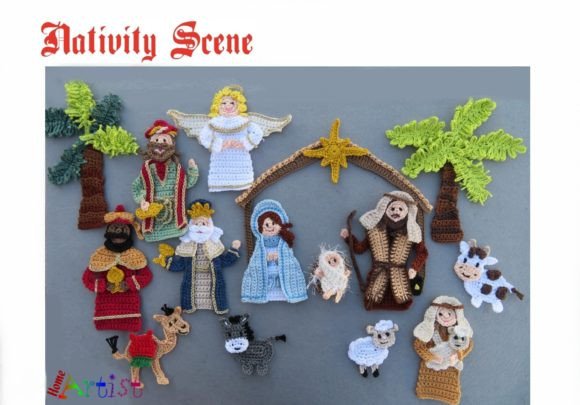
Nativity Scene Crochet Applique Pattern
See the listing ↗From the collection Crochet Appliques & Bows. New Creative Fabrica members get 10 free downloads, and any of these can be one of them.
Gifting Ornaments
A handmade ornament is a complete small gift, and it mails flat.
- Tie one to a wrapped present in place of a gift tag.
- Fasten a snowflake to a square of dark card with two small stitches of thread, so the lace shows.
- Add a tag with the year. Dated ornaments are the ones that get kept.
- For mailing, sandwich stiffened pieces between two sheets of cardboard so the arms do not bend. A rigid envelope cannot go through USPS sorting machines, so it is charged as nonmachinable; take it to the counter instead of guessing at stamps.
A set of three in one style looks more considered than three unrelated shapes. There are more ideas of this size in our guide to small crochet gifts, and ornaments are also a dependable seasonal item if you crochet for a craft fair.
Storing Them Until Next Year
Lay stiffened pieces flat between sheets of tissue paper in a rigid box. Do not hang them in storage, and do not pack anything on top. Keep the box somewhere dry: starch and sugar are water-soluble and soften in a damp attic or basement. They are also food. Silverfish eat starch, and the maker of Niagara spray starch points people toward its starch-free sprays for anything going into long storage. If a snowflake comes out limp next December, it can be dampened and stiffened again.
A plain caution for the season: keep crochet decorations away from candles and hot bulbs, and hang anything with beads or small parts out of reach of small children and pets.
Thread and Finishing Supplies for Ornaments
Lace snowflakes and stars are worked in thread, then stiffened and pinned flat to dry. Fiberfill is for the stuffed ornaments.
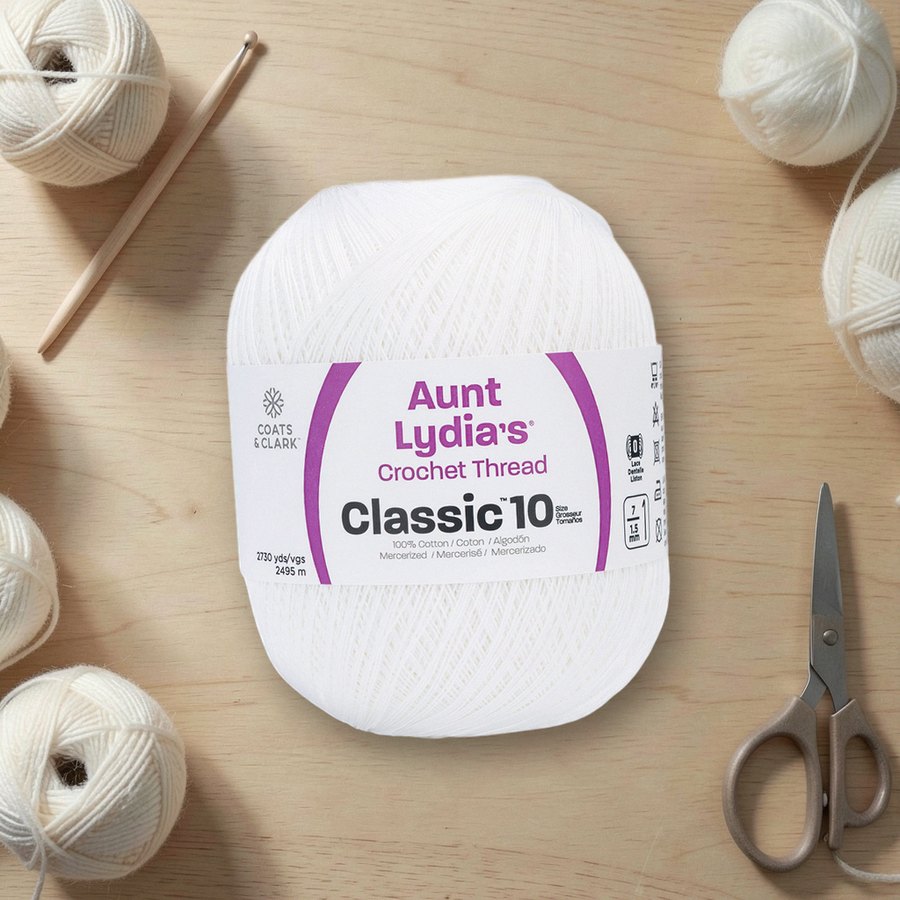 White crochet thread, size 10Aunt Lydia'sSee it on Amazon
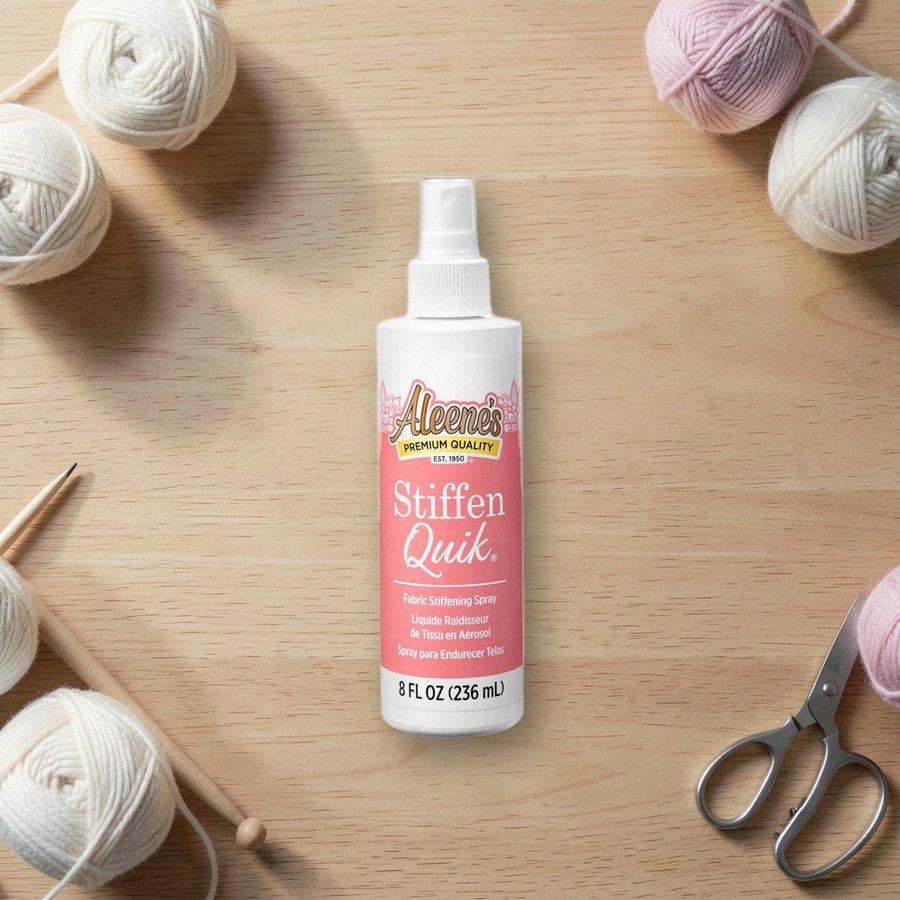 Spray fabric stiffenerAleene'sSee it on Amazon
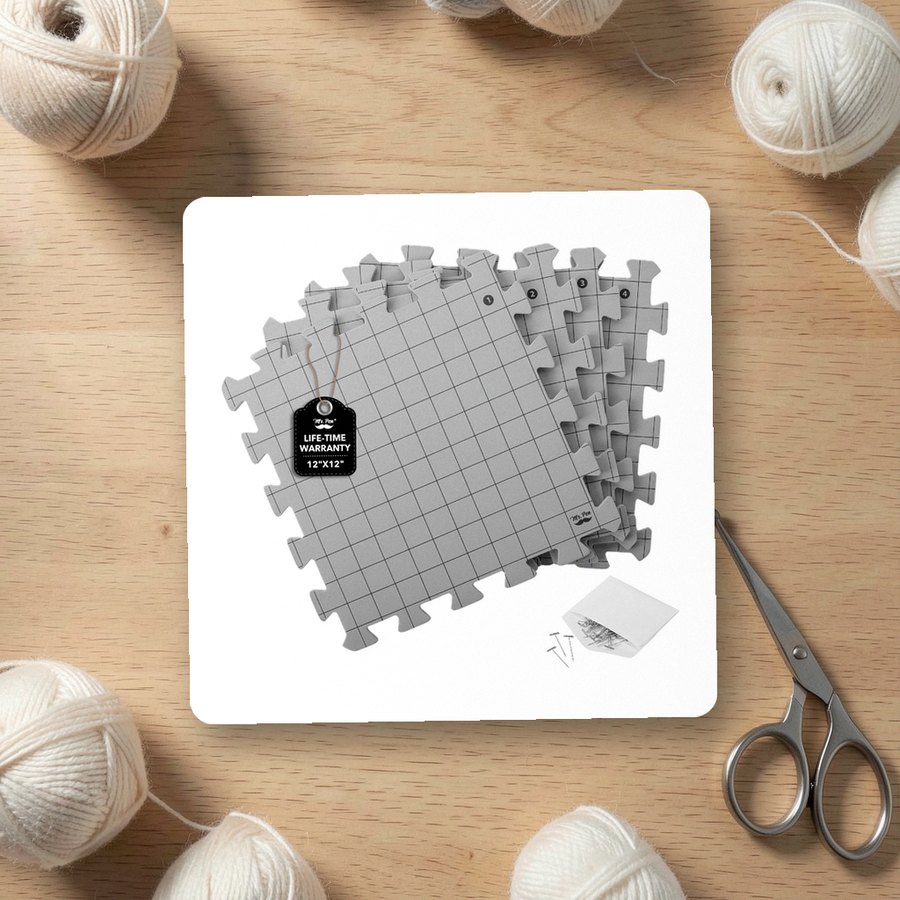 Foam blocking mats with T-pinsMr. PenSee it on Amazon
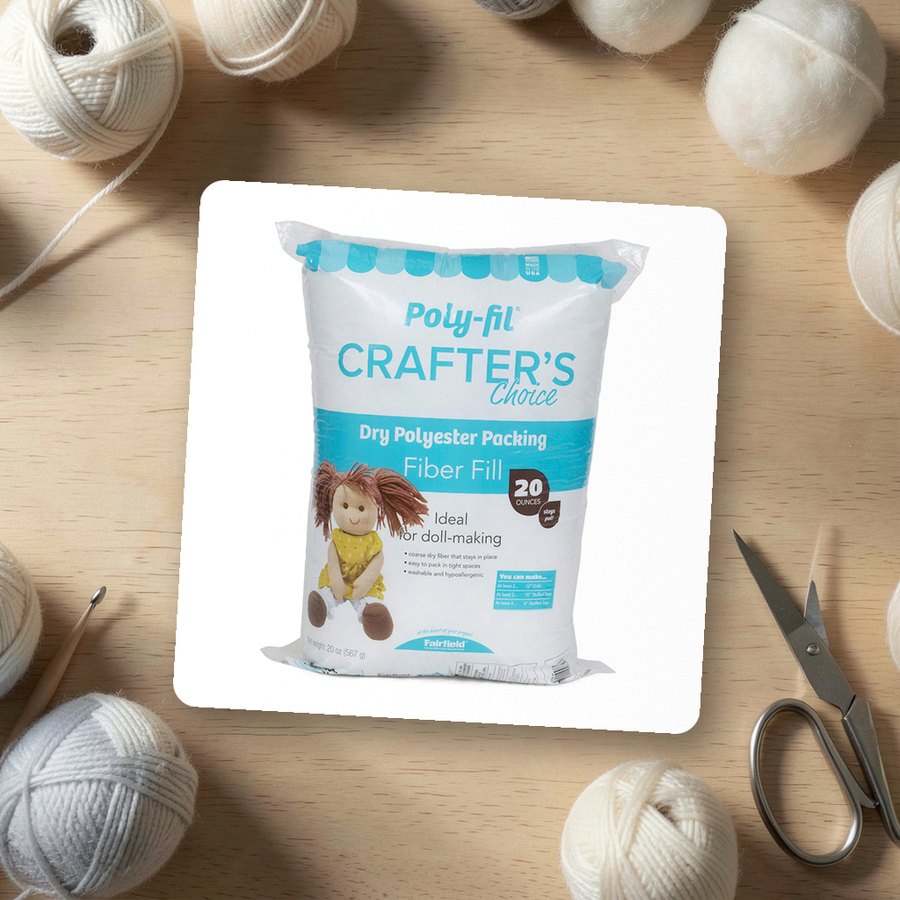 Polyester fiberfill stuffingPoly-FilSee it on Amazon
As an Amazon Associate we earn from qualifying purchases.
Size 10 thread calls for a fine steel hook, not the sizes in a yarn hook set.
Start With One Test Piece
Pick one shape this week and make a single one in the material you plan to use. Stiffen it, hang it, and look at it from across the room. That one test tells you the finished size, how long each takes and whether you like the thread, which is everything you need to plan the rest.
 Christmas Crochet13 hand-picked · open the collection →
Patterns Mentioned in This Guide
Christmas Crochet13 hand-picked · open the collection →Crochet Appliques & Bows13 hand-picked · open the collection → Crochet Gift Ideas11 hand-picked · open the collection →