For most crochet bags the best yarn is cotton: a worsted or DK weight cotton for totes and market bags, and a braided cotton cord for purses that need to stand up on their own. Cotton barely stretches, it wears well and it can be washed. Raffia and t-shirt yarn are good for particular styles, and soft acrylic is the one common yarn that causes trouble unless the bag is lined.
What a Bag Asks of Its Yarn
A bag is the only everyday crochet item that carries weight. That changes what matters.
- Low stretch. Crochet fabric lengthens under load, and an elastic fiber makes it worse. A bag that hangs at your hip when empty can hang at your thigh with a water bottle in it.
- Resistance to rubbing. A bag slides against a coat all day. Loosely spun and fuzzy yarns pill quickly.
- Stitch definition. Smooth, firmly twisted yarn shows texture and colorwork clearly.
- A sensible weight. The bag should not be heavy before anything is in it.
The Main Options Compared
| Yarn | Stretch under load | Weight of the bag | Washing | Best for |
|---|---|---|---|---|
| Cotton, worsted or DK | Low | Medium | Usually machine washable, often cool and gentle; check the label | Totes, market bags, everyday purses |
| Cotton cord, braided | Very low | Heavy | Hand wash or spot clean | Structured purses, bucket bags, clutches |
| Raffia or paper yarn | Almost none | Very light | Wipe clean in most cases | Summer bags, clutches |
| T-shirt yarn | Varies from ball to ball | Very heavy | Check the label | Chunky totes made fast |
| Acrylic | Moderate to high | Light | Machine washable, no ironing | Lined bags, colorwork, children's bags |
Cotton: The Default Choice
Cotton comes in two finishes, and they behave differently.
Mercerized cotton has been treated with a sodium hydroxide solution, which rounds out the fiber and makes it smoother, stronger, slightly glossy and better at taking dye. It keeps its shape, shows stitches sharply and resists fuzz. It is the better choice for purses and anything with texture or a tight pattern.
Unmercerized cotton, the matte kind often sold as kitchen or dishcloth cotton, is softer and comes in a wide range of colors. It works well for market bags and beach bags, though it relaxes more with use and its colors can fade or run. The label on Lily Sugar'n Cream, a widely sold kitchen cotton, says to wash colors separately in water no warmer than 86°F (30°C).
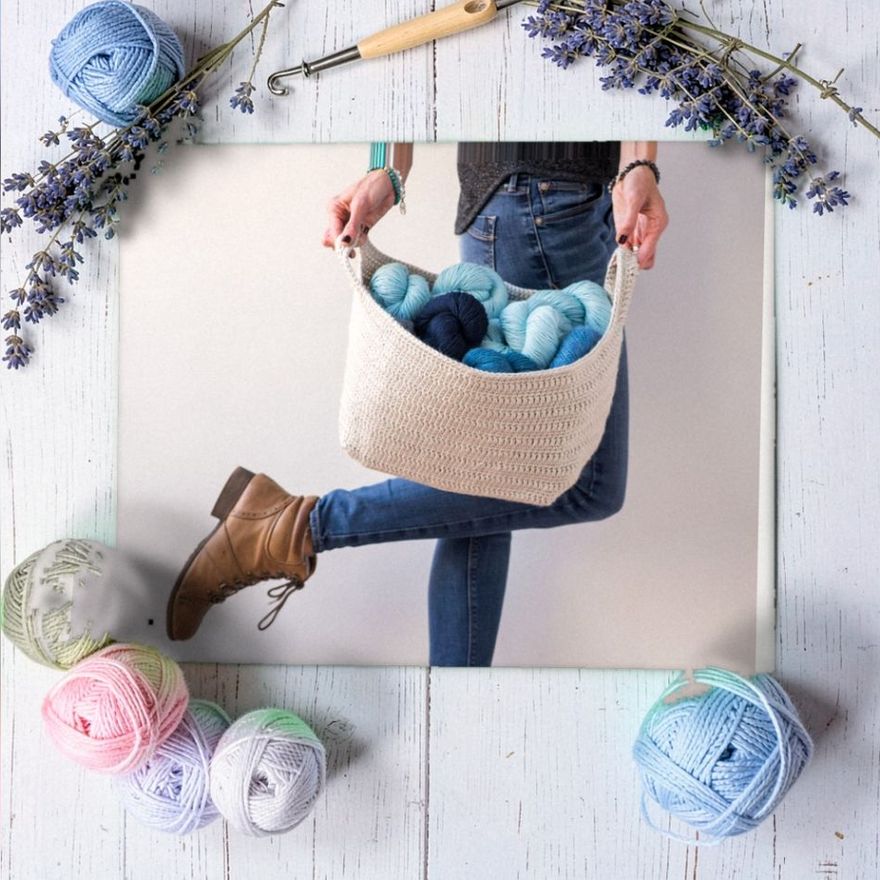
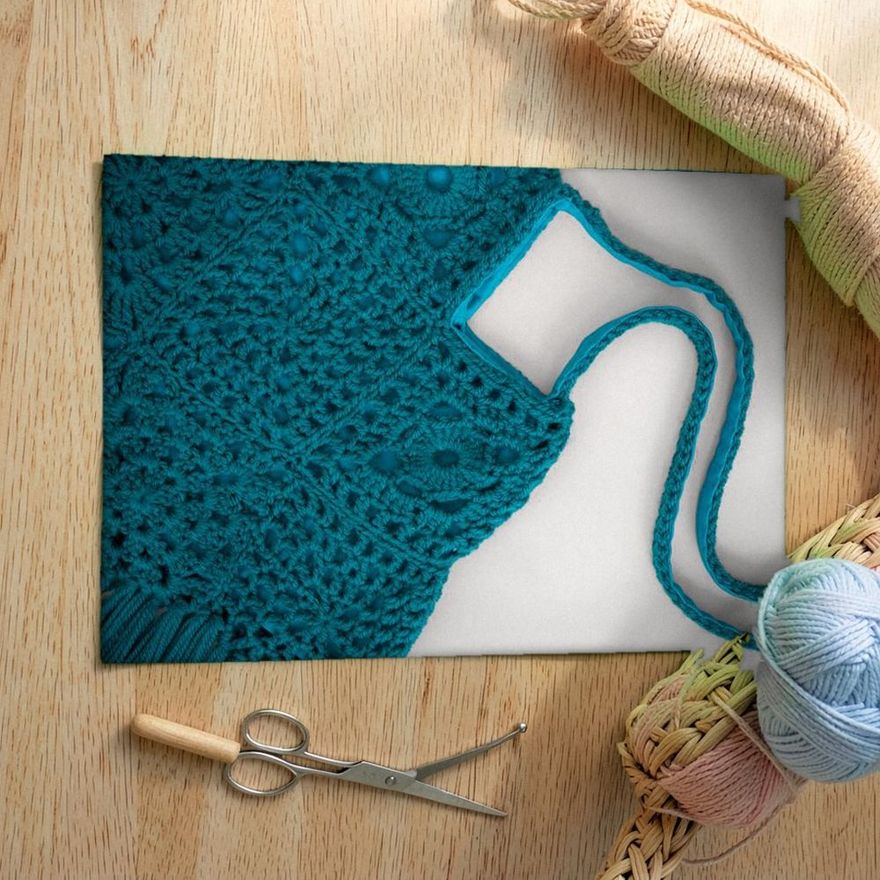
A market bag is the classic cotton project. The mesh is meant to expand around groceries, so some give is welcome there; what must not stretch is the handle.

Crochet Market Bag Pattern PDF & Video
See the listing ↗
Large Crochet Market Bag Pattern
See the listing ↗
Festival Bag Crochet Pattern
See the listing ↗From the collection Crochet Bag Patterns. New Creative Fabrica members get 10 free downloads, and any of these can be one of them.
Check each listing for the yarn the designer used. If you substitute, match the weight and the fiber, not only the color.
Cord, Raffia and T-Shirt Yarn
Braided cotton cord, the kind sold for macrame in 3 to 5 mm thicknesses, makes a firm fabric that stands on its own. Macrame cord also comes twisted and as a soft single strand; braided is the strongest of the three and the one to use for anything that carries weight. A purse in cord needs no lining to hold its shape. The cost is weight and thick, slow stitches. Braided polyester cord is a lighter relative that absorbs very little water, but its cut ends fray, so they are sealed by melting them lightly. The same cords make good baskets, which is why you will see them again among our crochet basket patterns.
Raffia yarn is made from paper, viscose or polypropylene, depending on the brand. All three give a crisp, straw-like bag that weighs very little. Read the label before washing. Paper raffia shrugs off a splash but is usually labeled wipe clean, and viscose loses 30 to 50 percent of its strength while it is wet, so neither should be soaked. Polypropylene is a plastic and tolerates water. Raffia is stiff on the hands and shows kinks if you unravel and rework it, so make a small swatch first.
T-shirt yarn is a strip of jersey fabric. It works up on an 8 to 12 mm hook, so a tote goes quickly. Because much of it is made from garment-industry leftovers, thickness and stretch vary between balls, even within one brand. Hoooked, which makes the widely sold Zpagetti, says each spool differs in structure, thickness, stretch and smoothness, and that a color will not come back in the same form once it sells out. Buy all you need at once and compare the balls by hand. Expect a heavy bag. A Zpagetti spool is about 120 m (131 yards) and weighs roughly 700 g by the maker's figure, and the maker's own bag patterns call for a whole one. That puts the finished tote at around a pound and a half before anything goes in it.
Where Acrylic Fits and What to Avoid
Acrylic is light, cheap to replace, washable and available in every color, which makes it tempting. Its weakness is that it gives under load and pills where it rubs. An unlined acrylic tote gets longer every time you use it.
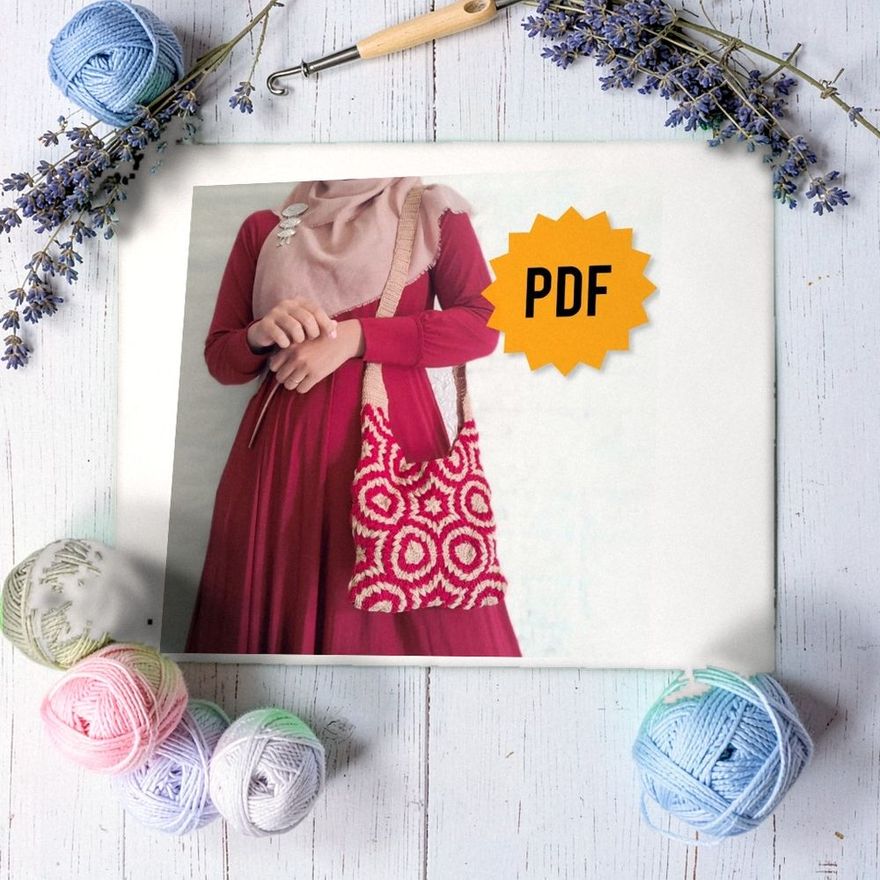
It is fine in three cases: when the bag will be fully lined, when the fabric is very dense colorwork such as tapestry crochet, or when the bag is small and carries almost nothing.
Yarns to leave on the shelf for bags:
- Bamboo, viscose and silk blends. They are made to drape, and a draping bag sags.
- Alpaca and superwash wool. Alpaca has almost no elasticity or memory, and superwash wool stretches more than untreated wool, so both grow under their own weight.
- Chenille and velvet yarns. They shed and loosen with friction.
- Loosely spun single-ply and fuzzy novelty yarns. They pill within weeks.
Ordinary wool has one legitimate use here: a bag that is crocheted large and then deliberately felted into a thick, firm fabric. That is a separate technique with its own patterns.
Go Down a Hook Size
Whatever the yarn, a bag fabric should be denser than a scarf fabric. Use a hook 0.5 to 1 mm smaller than the label suggests. If a cotton label says 5 mm (H-8), try 4.5 mm (7) or 4 mm (G-6). Yarn companies do the same in their own designs: Yarnspirations' market bag patterns for Sugar'n Cream, whose label says 5 mm, call for 3.75 mm and 4 mm hooks.
A dense fabric stretches less, hides the contents and keeps keys and pens from poking through. Single crochet is the standard stitch for bag bases and bodies for this reason. If the pattern gives a gauge, a bag is one of the cases where it is worth checking; the section on gauge in how to read a crochet pattern explains how.
Tight cotton is hard work for the hands. Work in shorter sessions than you would with soft yarn, and consider a hook with a thick cushioned handle.
Typical Sizes and How Much Yarn
| Bag | Typical size | Notes |
|---|---|---|
| Standard tote | About 15 in wide by 16 in tall (38 by 40 cm), with a 3 to 5 in gusset | The common size for ready-made canvas totes |
| Crochet market bag | 11.5 to 19 in wide, 13 to 18 in tall, unstretched | The range across published worsted cotton patterns |
| Shoulder strap | 20 to 22 in long, for a drop of 9 to 11 in | Drop is the gap between the top of the strap and the top of the bag |
A market bag in worsted cotton takes roughly 200 to 350 yards, which is two or three 120-yard balls of kitchen cotton. The pattern's materials list is the number to buy by.
Straps: Where Bags Fail
Straps take the whole load on a narrow strip, so they stretch first. Several fixes help, and you can combine them.
- Work the strap lengthwise. A strap made from a long chain with a few rows worked along it usually stretches less than one made of hundreds of short rows stacked end to end.
- Make it double. Crochet the strap twice as wide, fold it in half lengthwise and seam it, or crochet around a length of cotton cord so the cord carries the load.
- Back it. Sew grosgrain ribbon or cotton webbing to the underside by hand. This is the most reliable fix and takes fifteen minutes.
- Make it short. For an unlined cotton strap, stop a little before the length you want. It will find the rest on its own. A drop of 9 to 11 inches is what lets a bag sit on the shoulder, so measure the strap under load, with something heavy in the bag.
- Attach it over several stitches. Sew or crochet each end across the full width of the strap and through at least two rows of the bag, so the pull is spread out.
Ready-made leather or webbing handles are a reasonable shortcut on a purse.
When to Add a Lining
A fabric lining does three jobs: it stops the bag stretching, it keeps small things from slipping through the stitches, and it hides the inside. Mesh market bags do not need one. Purses, clutches and anything in acrylic do.
Use a plain woven cotton. Measure the finished bag, not the pattern's stated size, and cut the lining to those measurements plus a seam allowance of about half an inch on each side. Sew the side seams, fold the top edge under, slip the lining inside and stitch it by hand to the inner top edge of the bag, just below the last round.
Yarn, Cord and Handles to Start With
The fibers compared above are easy to find. Here is one cotton yarn and one cotton cord, with ready-made handles for the bag that should not stretch at all.
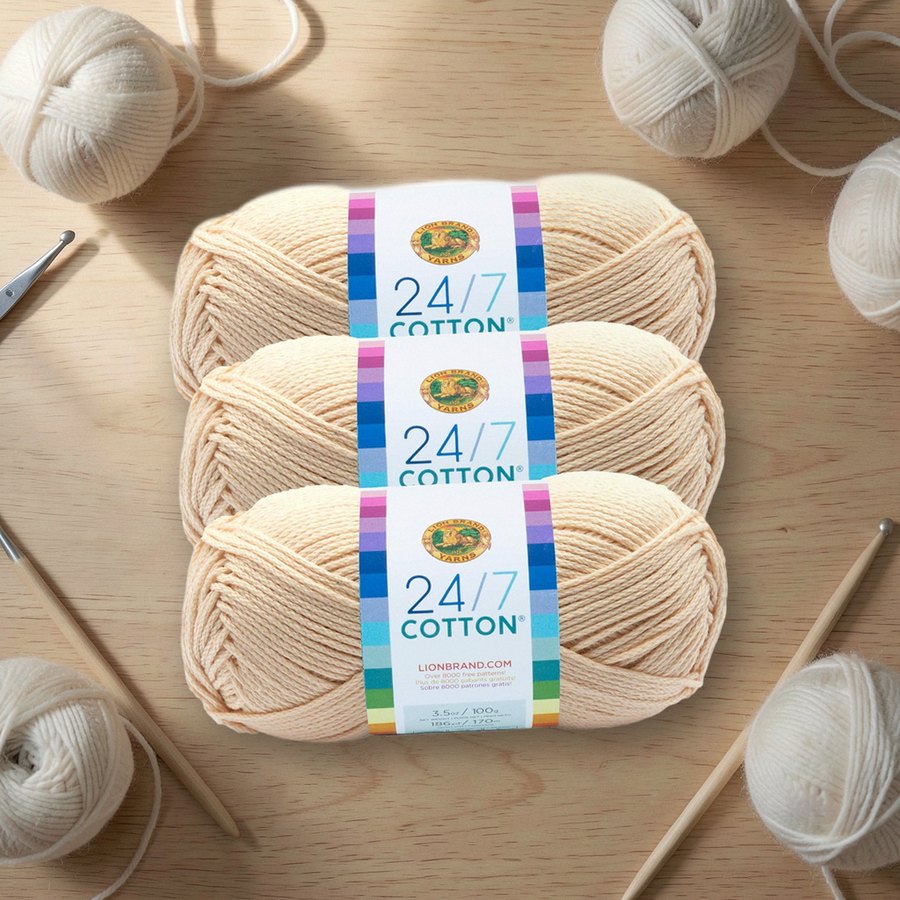 Worsted cotton yarn, three skeinsLion Brand YarnSee it on Amazon
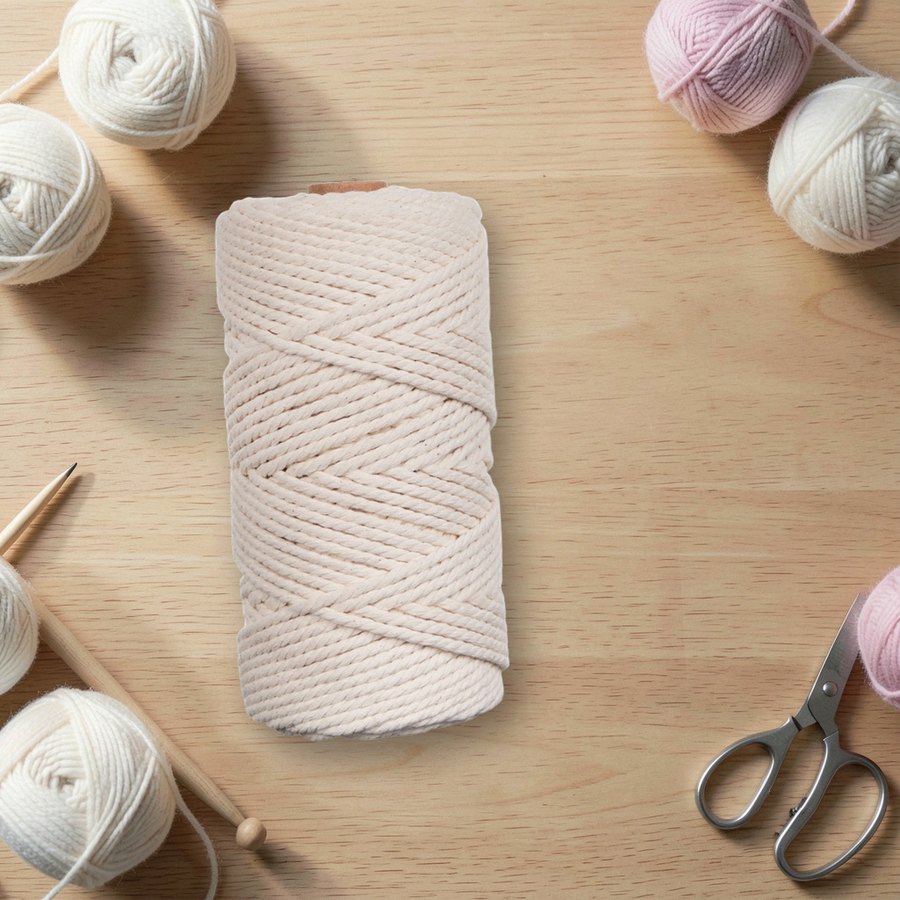 Natural cotton macrame cord, 3 mmNOANTASee it on Amazon
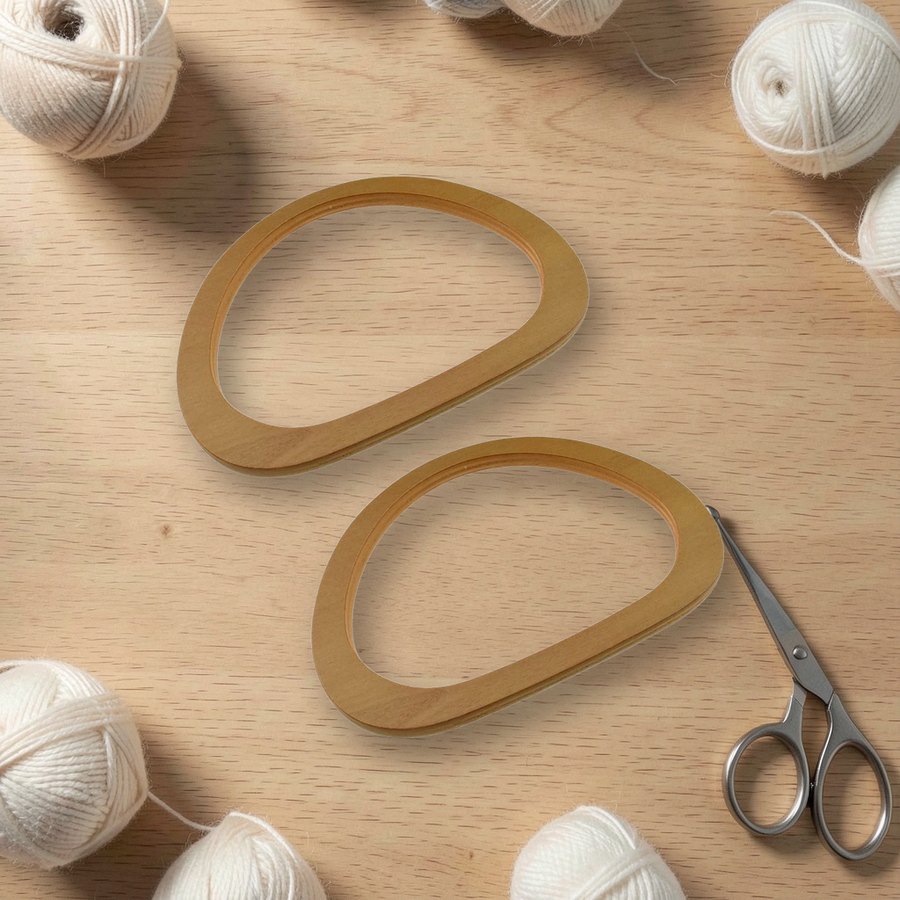 Wooden D-shaped bag handlesHAHIYOSee it on Amazon
As an Amazon Associate we earn from qualifying purchases.
Check the yardage on the label against your pattern before you order; a bag takes more than it looks.
Choose the Yarn for the Bag You Want
Decide what the bag is for, then let that pick the yarn: mesh and groceries, worsted cotton; a purse that should hold its shape, mercerized cotton or cord; a summer clutch, raffia; a soft bag in bright colors, acrylic with a lining.
These three purses from our crochet bag patterns are the kind of shaped bag where a firm yarn and a lining earn their keep:

Crochet Purse Pattern
See the listing ↗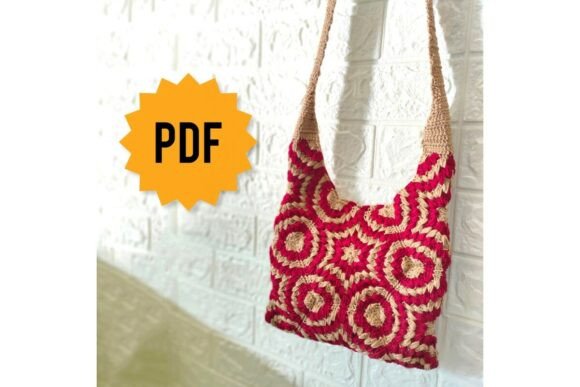
Zafia Crochet Bag Pattern
See the listing ↗
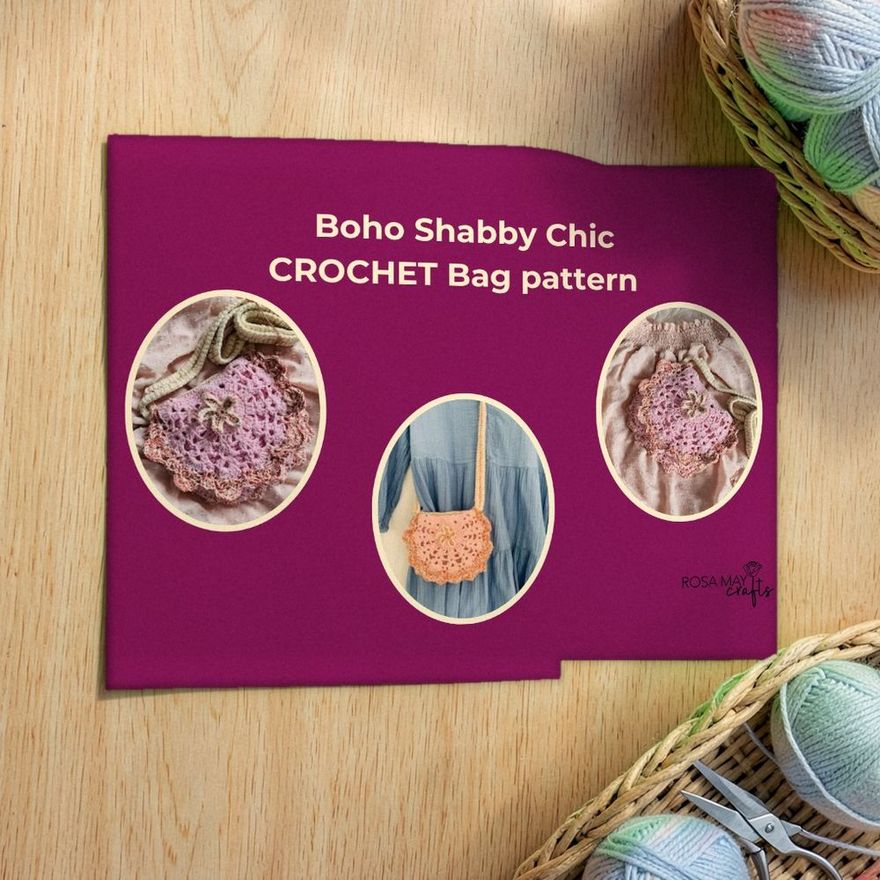
Boho Shabby Chic Crochet Bag Pattern
See the listing ↗From the collection Crochet Bag Patterns. New Creative Fabrica members get 10 free downloads, and any of these can be one of them.
If you have not made anything this large yet, a basket and a pouch come first on our list of beginner crochet projects, and both teach the dense fabric a good bag depends on.
Patterns Mentioned in This Guide
 Crochet Bag Patterns11 hand-picked · open the collection →
 Crochet Baskets & Coasters13 hand-picked · open the collection →