
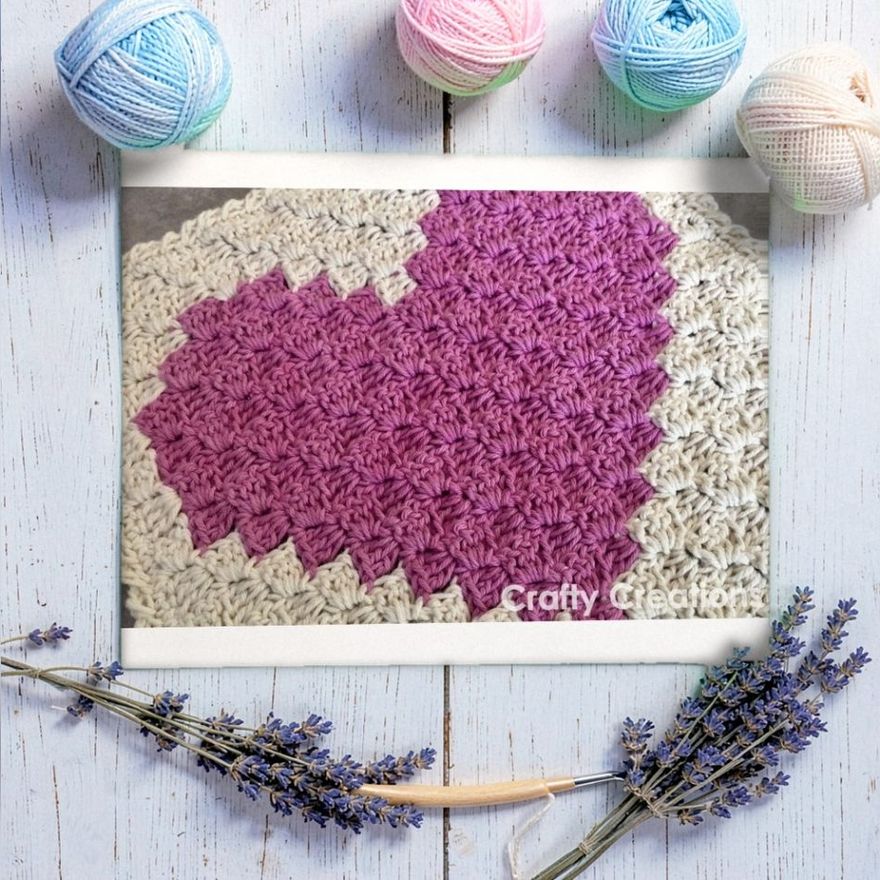
The best first crochet project is a small flat square in one stitch: a coaster or a washcloth. It takes an hour or two, it uses the three things every later project is built on (a foundation chain, a turning chain and a row of single crochet), and nobody will notice if it comes out a little crooked. From there, each project on this list adds one new skill, so by the end you have met almost everything a pattern can ask of you.
What Makes a Project Beginner-Friendly
Four things, and the difficulty of the stitch is only one of them.
- It is flat. Rows worked back and forth are easier to see and count than rounds, and there is no shaping to keep track of.
- It uses one or two stitches. Repeating single crochet two hundred times is what trains your hands. Variety can wait.
- The fit is forgiving. A coaster that comes out half an inch too wide still works. A hat that comes out an inch too small does not.
- It is small. Finishing matters. A first blanket often ends up as a bag of yarn in a closet; a first coaster is done before dinner.
The Yarn and Hook to Start With
Pick a smooth, light-colored yarn in worsted weight and the hook size printed on its label. Worsted is category 4, Medium, in the Craft Yarn Council's system, which numbers yarn from 0 (lace) to 7 (jumbo) and prints that number on the label. The hook on a worsted label is usually 5 mm (H-8) for kitchen cotton or 5.5 mm (I-9) for acrylic; the Council's own range for category 4 is 5.5 to 6.5 mm. Light colors let you see where the hook goes. Smooth yarn shows each stitch; fuzzy, bouclé and very dark yarns hide it.
Cotton shows stitches clearly and is the right fiber for coasters, washcloths and potholders, but it has almost no stretch and can feel stiff to work. Acrylic gives a little, which makes tight stitches easier to get the hook into. If cotton frustrates you on the first evening, practice in acrylic and come back to it.
You also need a blunt yarn needle for weaving in ends, small scissors and a few locking stitch markers.
Hooks are sold by millimeter size, and US packaging adds a letter or number. These are the Craft Yarn Council's equivalents for the sizes you will meet in the projects below:
| Metric | US size | Metric | US size |
|---|---|---|---|
| 2.25 mm | B-1 | 4.5 mm | 7 |
| 2.75 mm | C-2 | 5 mm | H-8 |
| 3.25 mm | D-3 | 5.5 mm | I-9 |
| 3.5 mm | E-4 | 6 mm | J-10 |
| 3.75 mm | F-5 | 6.5 mm | K-10½ |
| 4 mm | G-6 | 8 mm | L-11 |
A 2.5 mm hook has no US letter on that chart and a 3 mm hook is not on it at all, so when a pattern gives both, trust the millimeters.
Four Flat Projects Worked in Rows
1. Square coaster. Chain 16, work a single crochet into the second chain from the hook and into each chain after it, chain 1, turn, and repeat rows of 15 stitches until the piece is square. At the gauge printed on a ball of kitchen cotton such as Lily Sugar'n Cream (13 single crochet and 14 rows to 4 inches on a 5 mm hook), that is about 4.5 inches wide and takes about 16 rows. It teaches the foundation chain, the turning chain and where the first and last stitch of a row sit. Count every row. If the square narrows, you are skipping the last stitch; if it widens, you are adding one at the edge.
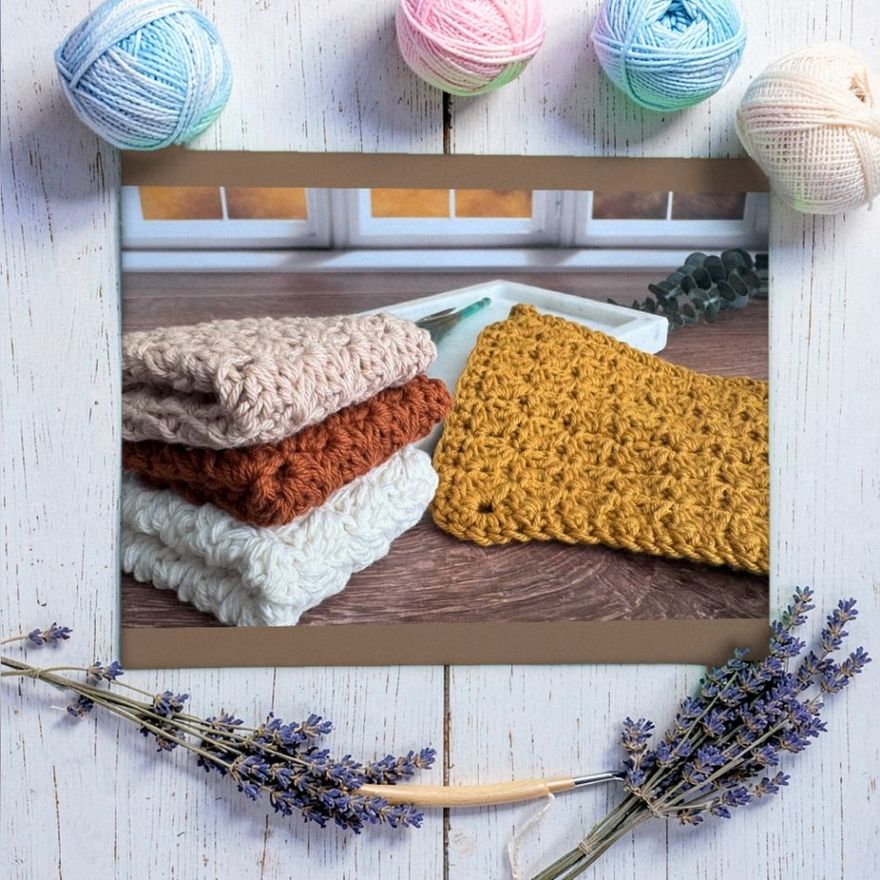
2. Washcloth. The same square, made bigger: 7 to 9 inches (18 to 23 cm), with 8 inches the most common. More rows give your tension time to even out, and a washcloth is a good place to try half double crochet or a simple textured stitch. Use cotton, because it absorbs water and goes in the washing machine. Follow the label for the temperature; some kitchen cottons ask for a cool, gentle cycle.
These three washcloths show how much texture you can get from basic stitches:

Slant Stitch Crochet Washcloth
See the listing ↗
Nitty Gritty Crochet Washcloth
See the listing ↗
Love-ly Washcloth Crochet Pattern
See the listing ↗From the collection Crochet Gift Ideas. New Creative Fabrica members get 10 free downloads, and any of these can be one of them.
3. Bookmark. A narrow strip, eight or so stitches wide and 6 to 7 inches long, in thinner cotton with a smaller hook. Printed bookmarks are typically 2 by 6 or 2 by 7 inches, and a crocheted one can be a little narrower. It teaches you to handle fine yarn and to keep both edges tidy, since both are on show. Add a tassel and it is a gift. There are more shapes among our crochet bookmark patterns once the plain strip feels easy.
4. Flat applique. A heart, a leaf or a five-petal flower. Appliques put stitches of different heights side by side and work several stitches into one, which is how crochet makes curves. Each takes minutes, so make five and watch them improve.
Four Projects That Teach the Round
5. Round coaster. Start with a magic ring and 6 single crochet, then increase evenly: 12 stitches, 18, 24 and so on. It teaches the magic ring, the increase and the habit of marking the first stitch of each round. If your circle ripples or curls into a bowl, the coaster guide explains the arithmetic behind it.
6. Granny square. Rounds of three-double-crochet groups separated by chains, with two groups in each corner. It teaches double crochet, working into a space instead of a stitch, and changing color at the start of a round. One square is a coaster. A stack of them is a bag, a pillow or a blanket.
7. Potholder. Two squares or circles held together and joined around the edge with single crochet through both layers. It teaches joining, and working through two thicknesses at once. A single layer is too thin to be much use, which is why potholders are doubled. Ready-made ones are mostly 7 to 9 inches square. Use cotton or wool here. Yarn makers such as Lion Brand recommend 100% natural fibers for potholders because they withstand high temperatures, while acrylic can melt against a hot pan.
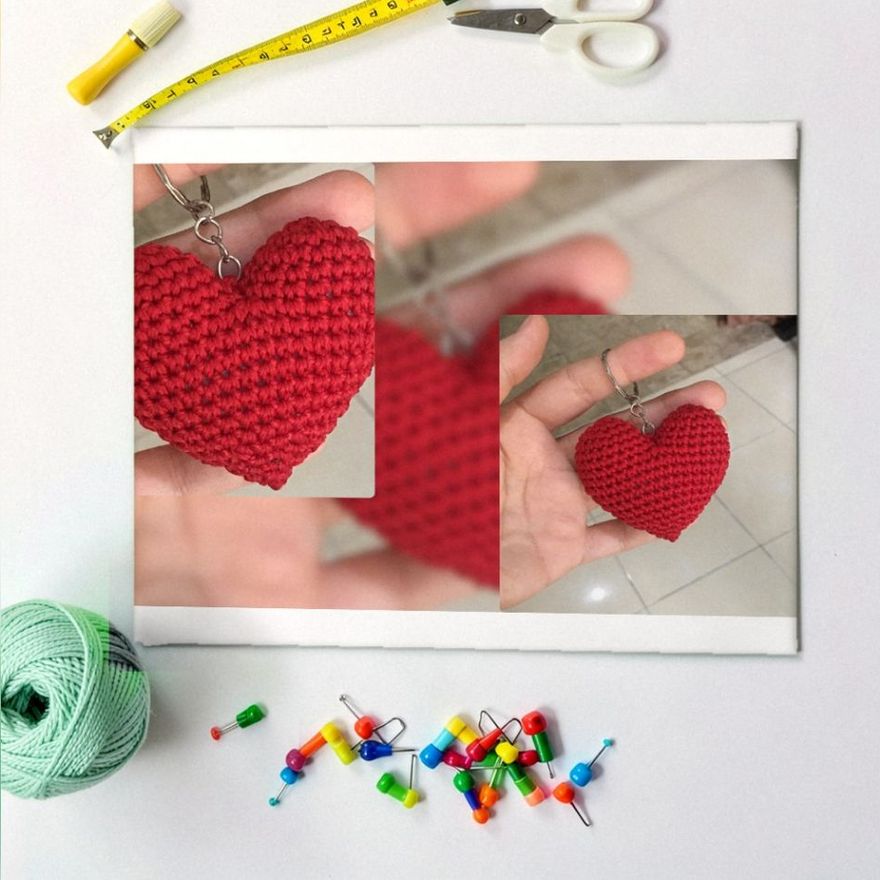
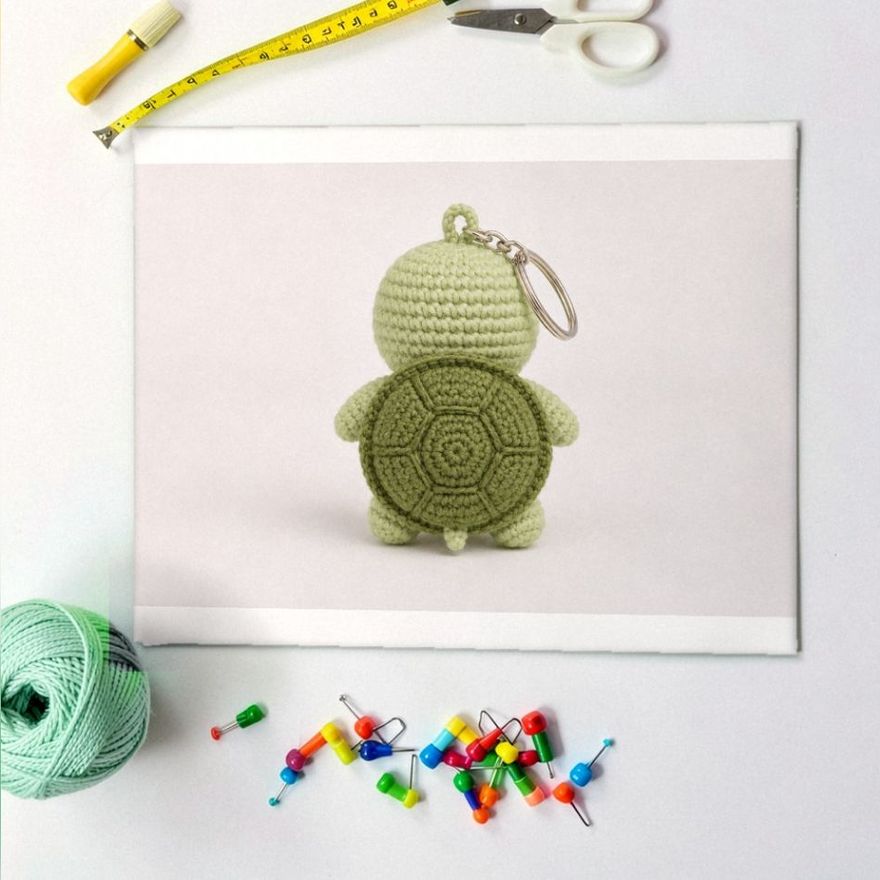
8. Keychain. A small stuffed shape worked in a continuous spiral. It is your first amigurumi, and it teaches the decrease, stuffing, closing the last round and sewing parts together. Because the piece is tiny, each of those happens only a few times. Our crochet keychain ideas cover what to make and how to attach the ring.
For the round coaster and the basket that follows, these are simple shapes to start from:

Crochet Coasters Flower Easy Pattern
See the listing ↗
Smile Coaster Crochet Pattern
See the listing ↗
Essentials Basket Crochet Pattern
See the listing ↗From the collection Crochet Baskets & Coasters. New Creative Fabrica members get 10 free downloads, and any of these can be one of them.
Three Projects With Sides and Straps
9. Small basket. Make a flat circle, then stop increasing. The sides rise on their own. A basket teaches the turn from base to wall and how to make a stiff fabric, either with a hook smaller than the label suggests or with two strands held together.
10. Pouch. A rectangle folded and seamed at the sides, with a flap and a button. It teaches seaming and the simplest buttonhole there is: a few chains that skip the same number of stitches.
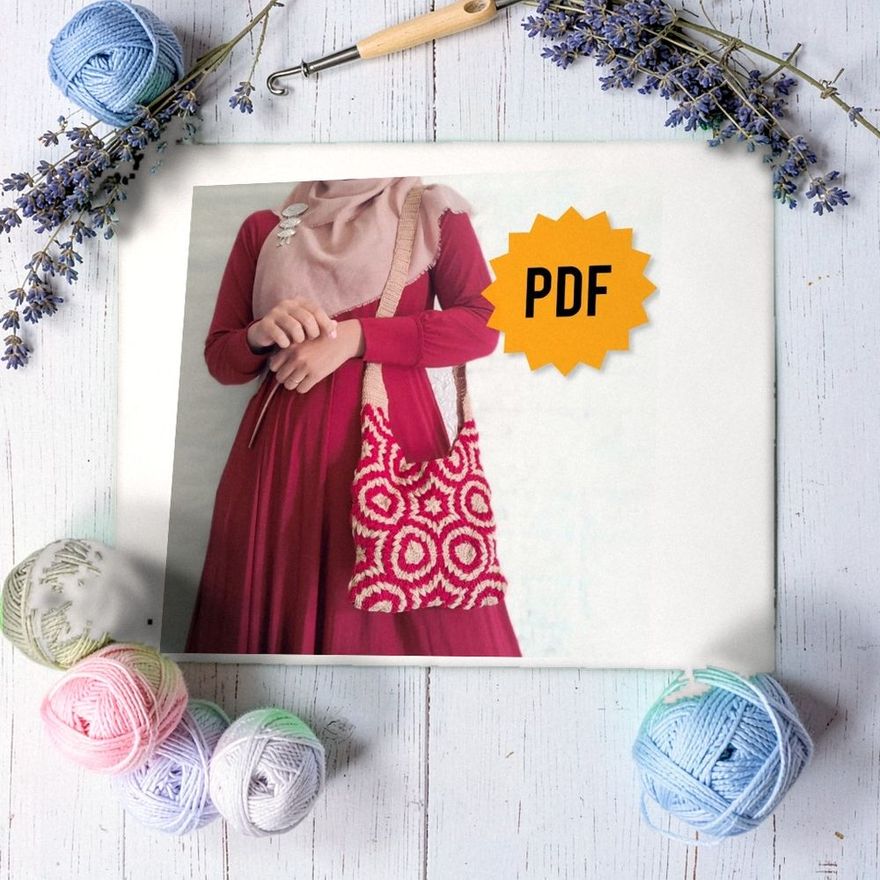
11. Market bag. A solid base, a body of chain-loop mesh and two handles. Every technique in it is one you have already used. What is new is the scale: this is several evenings, not one sitting, and the handles have to carry weight. That makes the yarn choice matter, so read about the best yarn for crochet bags before you buy it.
When you get that far, here are two market bags and a small purse to look at:

Crochet Market Bag Pattern PDF & Video
See the listing ↗
Large Crochet Market Bag Pattern
See the listing ↗
Crochet Purse Pattern
See the listing ↗From the collection Crochet Bag Patterns. New Creative Fabrica members get 10 free downloads, and any of these can be one of them.
The Whole List at a Glance
| # | Project | Worked in | New skill | Rough time |
|---|---|---|---|---|
| 1 | Square coaster | Rows | Chain, single crochet, turning | About an hour |
| 2 | Washcloth | Rows | Even tension, a second stitch | An evening |
| 3 | Bookmark | Rows | Fine yarn, neat edges, tassel | 1–2 hours |
| 4 | Flat applique | Rows or one round | Mixed stitch heights | Under an hour |
| 5 | Round coaster | Rounds | Magic ring, increases | About an hour |
| 6 | Granny square | Rounds | Double crochet, corners, color changes | About an hour |
| 7 | Potholder | Rows or rounds | Joining two layers | An evening |
| 8 | Keychain | Spiral | Decreases, stuffing, sewing | An evening |
| 9 | Small basket | Rounds | Base to sides, stiff fabric | One or two evenings |
| 10 | Pouch | Rows | Seaming, a buttonhole | Two evenings |
| 11 | Market bag | Rounds | Mesh, handles, scale | Several evenings |
The times are estimates for a first attempt and vary a lot from one person to the next. The second one of anything goes much faster.
When you start buying patterns, look for the skill level on the first page. The Craft Yarn Council defines four: Basic (basic stitches, perhaps with simple increases and decreases), Easy (simple stitch patterns, color work or shaping), Intermediate and Complex. Projects 1 to 5 here are Basic. The rest are Easy.
Mistakes Every First Project Has
- A tight foundation chain. The bottom edge pulls in and the piece fans out above it. Chain more loosely, or use a hook one size larger for the chain only.
- Wandering edges. The last stitch of a row is easy to miss because it leans over. Put a stitch marker in the first stitch of every row until you can recognize it.
- Split yarn. The hook goes through the strand instead of under it. Slow down for a few stitches; it usually means the yarn is loosely twisted or the hook tip is sharp.
- Uneven stitches. These even out with practice and nothing else. Row thirty always looks better than row three.
Keep your first crooked coaster. Put it next to the fifth one and you will see more progress than any tutorial can describe.
A Short Kit for Your First Projects
Every project on this list comes out of the same small kit: one smooth, light-colored worsted yarn, a hook in the size on its label, a blunt needle and a few markers.
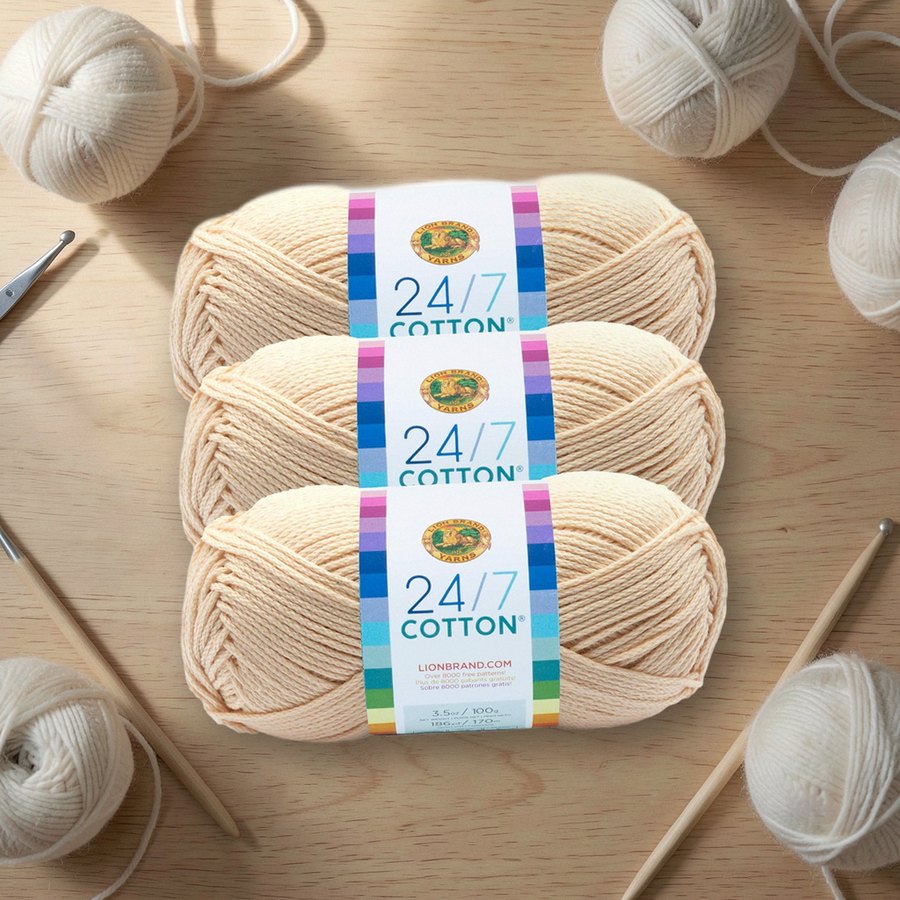 Worsted cotton yarn, three skeinsLion Brand YarnSee it on Amazon
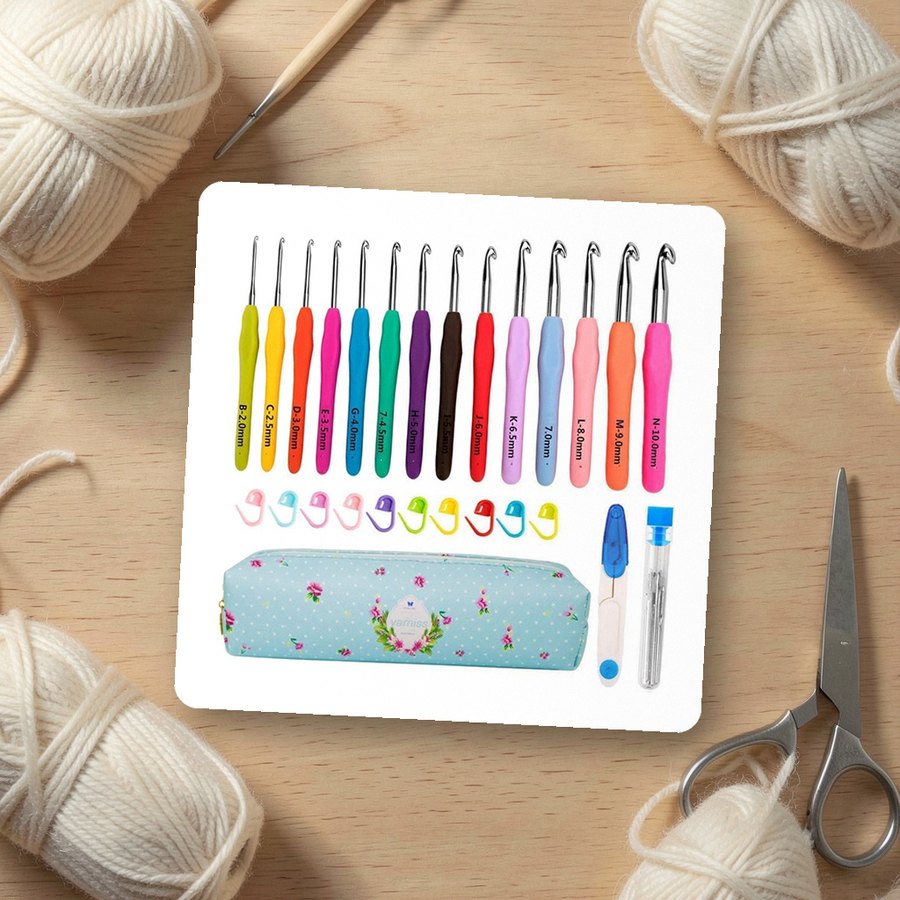 Ergonomic crochet hook set, 2 to 10 mmYarnissSee it on Amazon
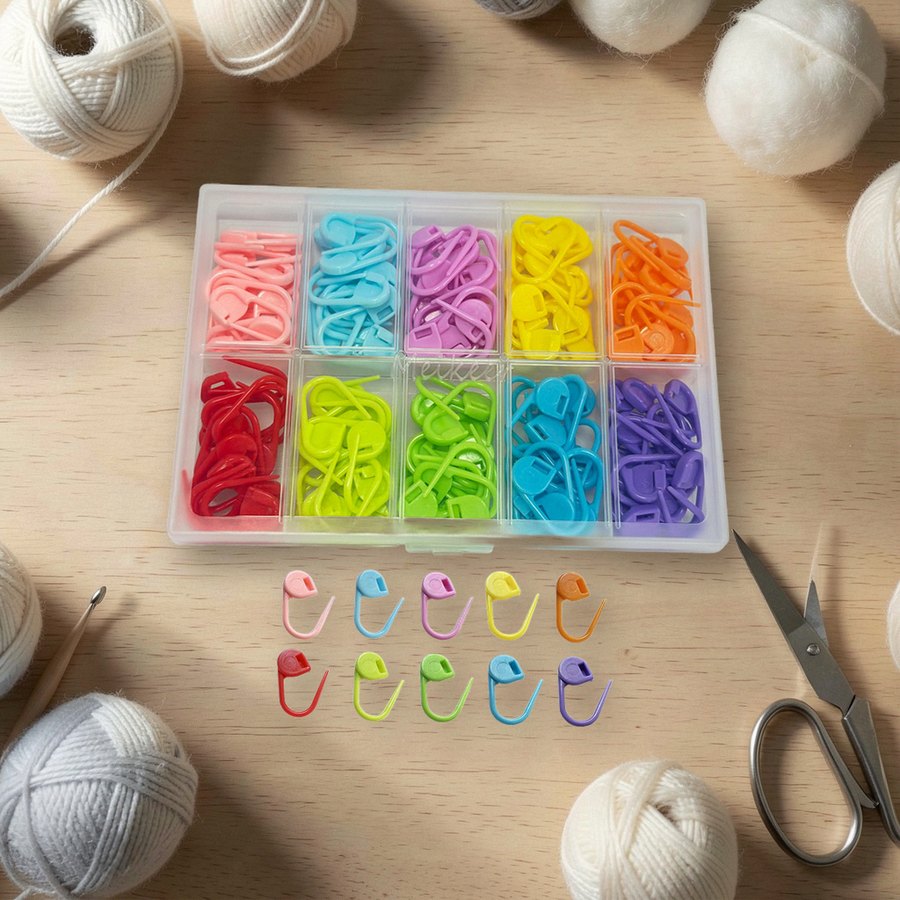 Locking stitch markersMeikeerSee it on Amazon
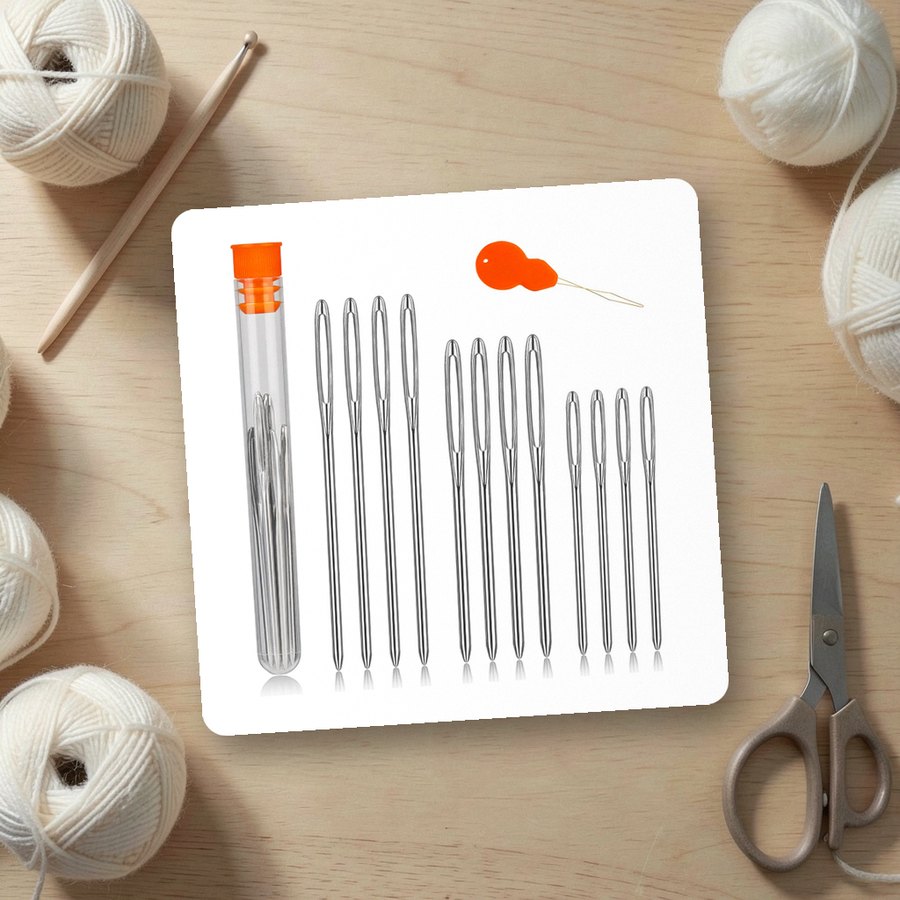 Blunt steel yarn needlesTLKKUESee it on Amazon
As an Amazon Associate we earn from qualifying purchases.
A set of hooks is practical, because the next pattern will ask for a different size.
What to Do Next
Make project 1 or 2 twice, without a pattern, until the edges stay straight. Then pick the next item from a written pattern, and spend ten minutes on how to read a crochet pattern first, so the abbreviations and the numbers at the end of each line make sense. After that the order above is only a suggestion: if the keychain is what made you want to learn, go and make the keychain.
Patterns Mentioned in This Guide
Crochet Baskets & Coasters13 hand-picked · open the collection →Crochet Gift Ideas11 hand-picked · open the collection → Crochet Bag Patterns11 hand-picked · open the collection →