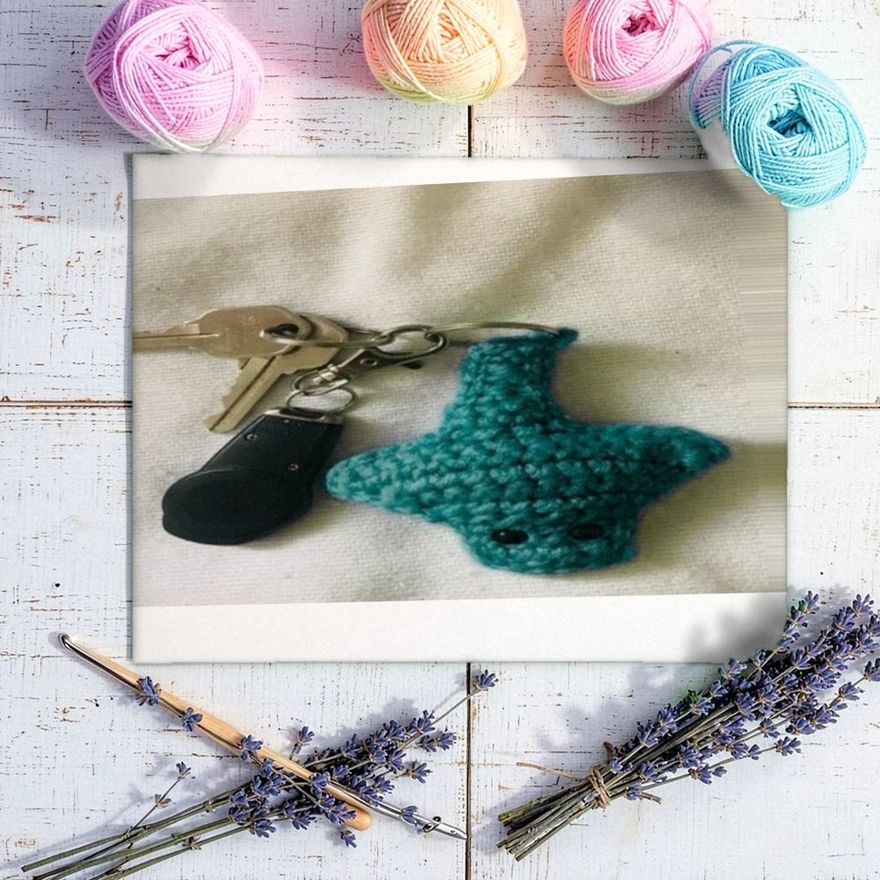
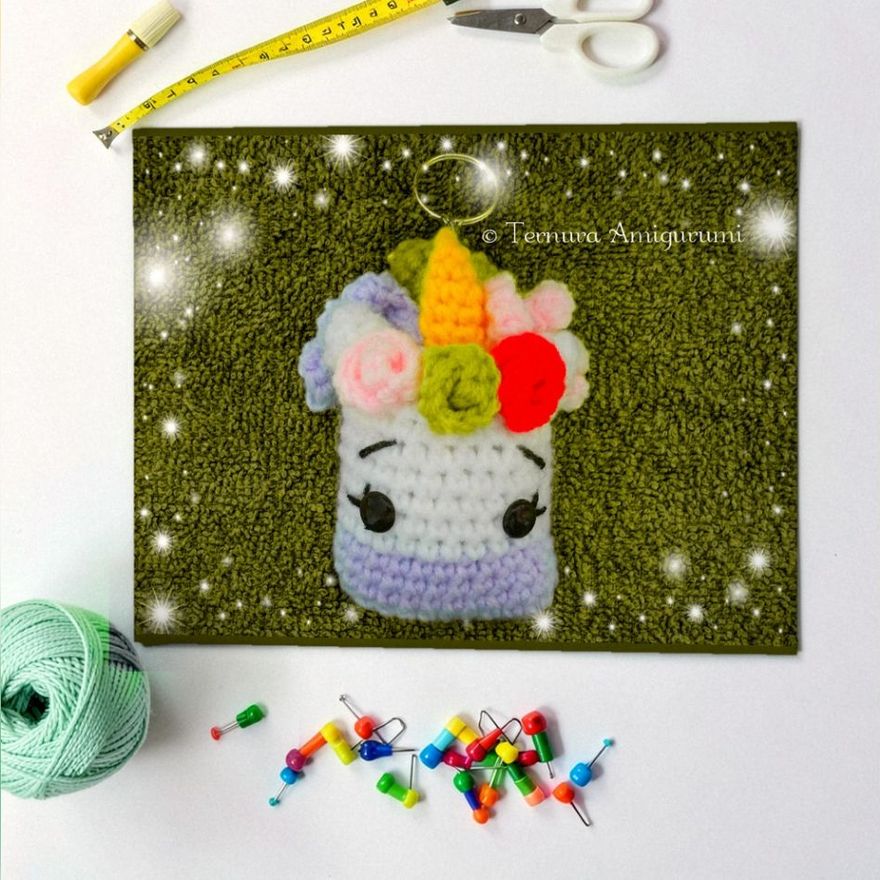
Almost any small crochet shape can become a keychain: a stuffed animal, a piece of fruit, a heart, an initial. Two things decide whether it survives a few months on a set of keys. The fabric has to be tight and made of a yarn that does not fuzz, and the ring has to pass through whole stitches or a reinforced loop, never a single strand of yarn.
Shapes That Work at Keychain Size
A keychain is comfortable at about 2 to 3 inches (5 to 8 cm). Smaller than that and the details get fiddly; much larger and it will not fit in a pocket.
- Mini amigurumi. Animals worked in a spiral and stuffed: turtles, dogs, unicorns, sea creatures. Choose compact bodies. Long thin legs and tails catch on things and are the first parts to come loose.
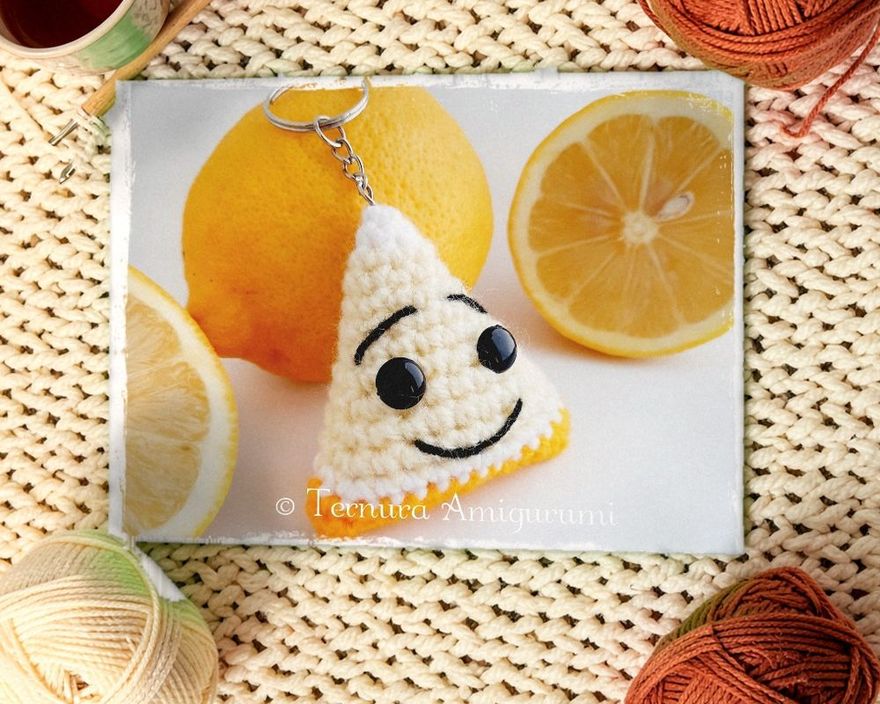
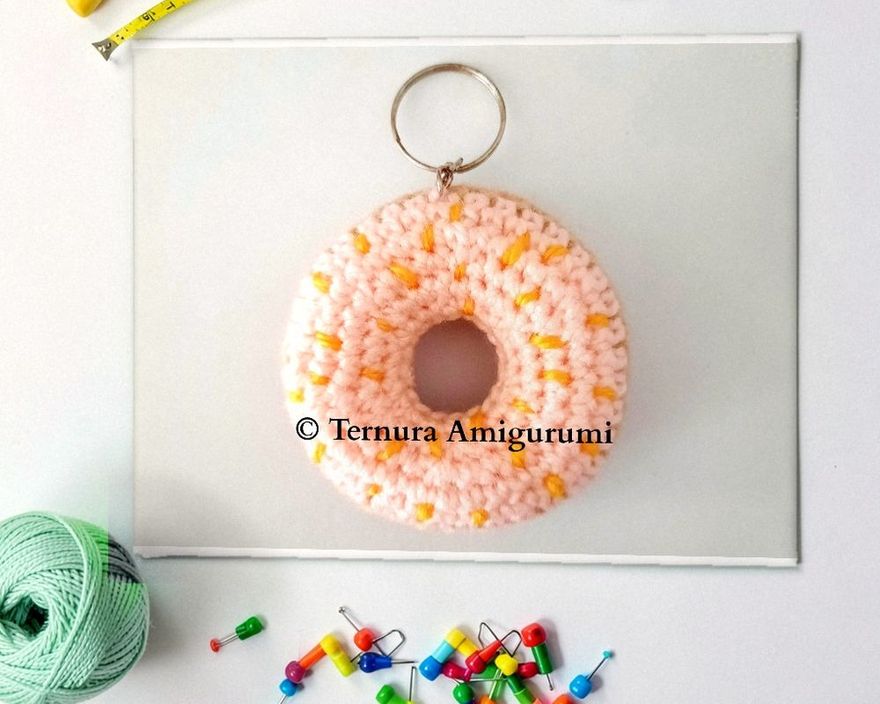
- Fruit and food. Lemons, strawberries, donuts, chili peppers. These are usually one or two pieces with almost no sewing, which makes them the quickest stuffed option.
- Hearts and flat shapes. Two flat pieces joined around the edge, with or without a pinch of stuffing. They sit flat in a pocket.
- Initials. A crocheted letter, either doubled or backed with felt so it keeps its outline.
- Tiny objects. A miniature hat, a mushroom, a little bag. Good when you want something that is not an animal.
Three compact animals with bodies that suit a key ring:

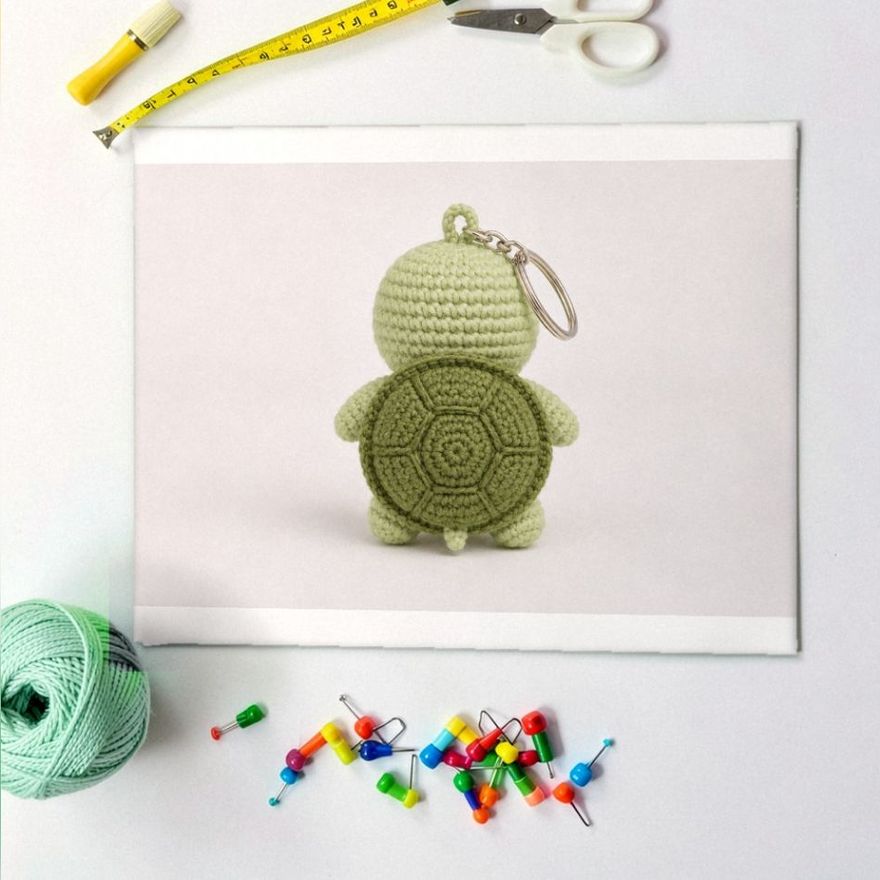
Cute Crochet Turtle Keyring Pattern PDF
See the listing ↗
Stingray Keychain Crochet Pattern
See the listing ↗
Crochet Pattern Unicorn Keychain
See the listing ↗From the collection Crochet Keychains. New Creative Fabrica members get 10 free downloads, and any of these can be one of them.
Yarn and Hook
Cotton is the standard choice. It has crisp stitch definition, it does not stretch, and mercerized cotton in particular resists the fuzzing that turns a soft acrylic piece shabby after a few weeks of rubbing against keys. Mercerized means the yarn has been treated with sodium hydroxide, which leaves the fiber smoother, stronger and slightly glossy.
Use a light yarn so the piece stays small:
- sport or DK cotton with a 2.5 to 3 mm hook, or
- worsted cotton with a 3.5 mm (E-4) hook for a slightly larger, sturdier result. Many amigurumi makers go down to 2.75 mm (C-2) with worsted.
In both cases the hook is 1 to 1.5 mm smaller than the yarn label suggests, and that is deliberate. The Craft Yarn Council's standard ranges are 3.5 to 4.5 mm for sport, 4.5 to 5.5 mm for DK and 5.5 to 6.5 mm for worsted, and those are meant for fabric that drapes. Stuffed pieces need a fabric with no gaps. Stretch a finished round over your fingertip; if you can see skin between the stitches, go down another quarter or half millimeter.
Stuffing: How Much Is Enough
Polyester fiberfill is the usual filling. Add it in small pinches and push each one into place with the blunt end of the hook or a chopstick, starting with the parts farthest from the opening.
Stop when the piece holds its shape and springs back if you squeeze it. Past that point the stitches start to pull apart and white filling shows through, which no amount of tidying will hide. Flat shapes need only a wisp, or nothing.
Stuff before the opening gets too small to reach through, while a fingertip still fits, and top up just before you close the last round.
Eyes and Small Parts
Safety eyes of 6 mm are the usual choice for pieces under 3 inches, with 4 or 5 mm for the very smallest and 8 mm if you want an oversized, cartoonish look. They go in before you finish stuffing, with the washer pressed on from the inside until it clicks. Embroidered eyes, a few straight stitches or a French knot in black thread, are the alternative and cannot come off.
Sew ears, fins and legs on with the yarn tail, passing through each part at least twice and through the body, not only the surface loops. A keychain is handled far more roughly than a shelf toy.
A plain caution: a keychain has small hard parts and a metal ring, so it is not a toy for babies or toddlers, however cute the animal. Despite the name, safety eyes are sold with a choking-hazard warning for children under 3. That is the age line in the US small-parts rule, which treats as a hazard any piece that fits inside a test cylinder 1.25 inches wide.
Choosing the Hardware
| Hardware | What it is | Best for |
|---|---|---|
| Split ring | The classic double-coil key ring, most often 1 inch (25 mm) across; sold from about 20 to 35 mm | Keys |
| Split ring with chain | A key ring with a short chain and a small open ring at the end | Most keychains: the chain lets the piece hang and swing |
| Lobster or swivel clasp | A spring clip, often on a swivel | Bag charms, zipper pulls, anything that gets moved between bags |
| Jump ring | A single ring of wire with one cut | The link between your crochet and the rest |
| Ball chain | A beaded chain with a snap connector | Light, flat pieces |
Buy jump rings in thick wire. Wire is sold by gauge, and a lower number is thicker: 16 gauge (about 1.3 mm) or 18 gauge (about 1 mm) suits a keychain, while 20 and 22 gauge rings are made for earrings and light chains and pull open under load.
Open a jump ring by twisting its ends sideways, one toward you and one away, with two pairs of pliers. Pulling the ends apart weakens the ring and it never closes into a true circle again.
Three Secure Ways to Attach the Ring
A crocheted loop. Join the yarn at the top of the finished piece, chain 8 to 10, pass the chain through the ring or clasp, and slip stitch into the stitch where you started. Then run the yarn tail through the base of the loop two or three more times with a needle, knot it and bury the end inside the stuffing. The loop takes the wear, and it is anchored in several places.
A jump ring through the fabric. Open the jump ring, slide it under two complete stitches at the top of the piece, add the chain or clasp, and close it. Two stitches matter: a ring that hangs from one strand will saw through it.
Crocheting over the ring. For flat pieces, work the first stitches directly around a closed metal ring. Insert the hook through the ring, pull up a loop and complete a single crochet, so that each stitch wraps the metal. Four or five stitches make a tab that cannot slip off, and you carry on into the piece from there.
Whichever you use, finish the same way. Knot the tail close to the fabric, pass the needle through the body and out the other side, pull slightly, and trim. The cut end draws back inside and stays there.
Where to Put the Attachment Point
A keychain hangs from one point, so that point decides how it looks. Before you attach anything, pinch the piece between two fingers where you plan to put the loop and let it dangle.
Animals usually hang best from the top of the head or the middle of the back. Fruit hangs from the stem end. A heart can hang from the dip between its two curves or from one side, which shows it at a slant. If the piece tips forward, move the point back a stitch or two.
Gifts, Bag Charms and Sets
Swap the split ring for a lobster clasp and the same piece becomes a bag charm or a zipper pull for a backpack or pencil case. This is the more forgiving use, since a charm is not crushed in a pocket.
Initials make a keychain personal with very little extra work. A crocheted letter needs a backing of felt, or a second letter sewn behind it, to stay rigid. Flat motifs from our crochet applique patterns work the same way: make two, join them around the edge and add a loop.

Alphabet Lowercase Crochet Applique
See the listing ↗
Sunflower Crochet Applique
See the listing ↗
Flower Set Crochet Applique Pattern
See the listing ↗From the collection Crochet Appliques & Bows. New Creative Fabrica members get 10 free downloads, and any of these can be one of them.
Because one takes an evening and uses up leftover yarn, keychains are among the easiest small crochet gifts to make in batches, and they are a staple if you plan to crochet for a craft fair.
Rings, Clasps and Filling
A keychain uses a few yards of yarn, so the hardware and the filling decide how long it lasts. Rings and clasps come in packs, which suits a project nobody makes just once.
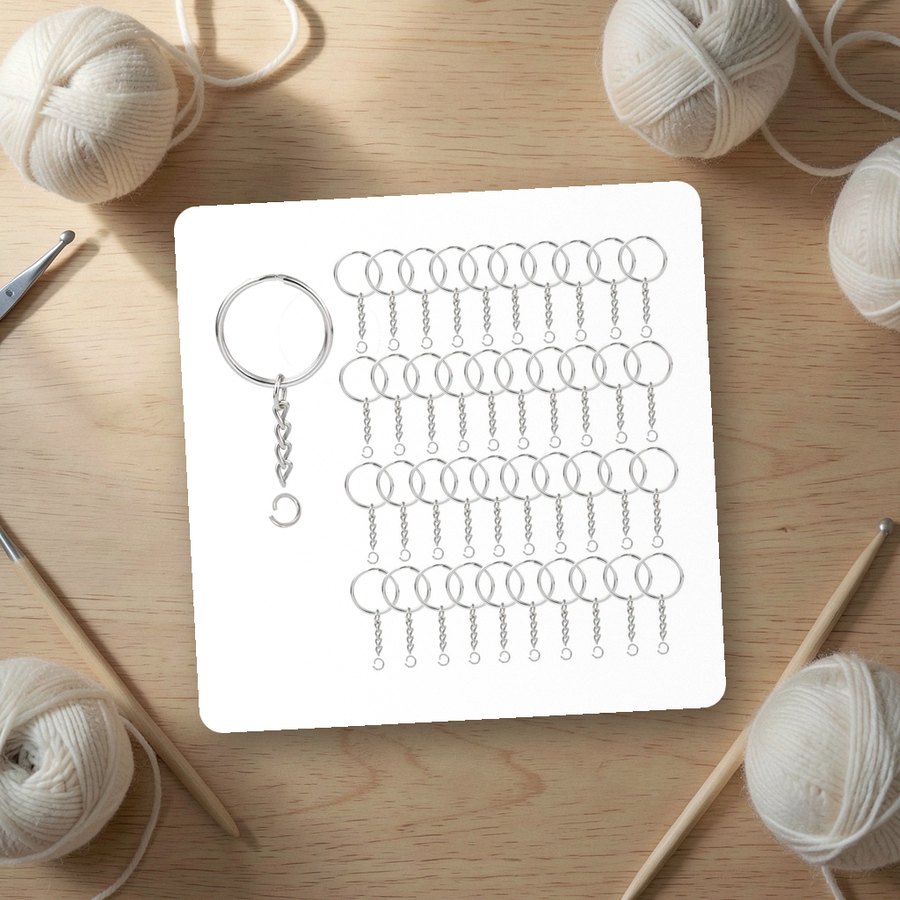 Split key rings with chainKANSPHYSee it on Amazon
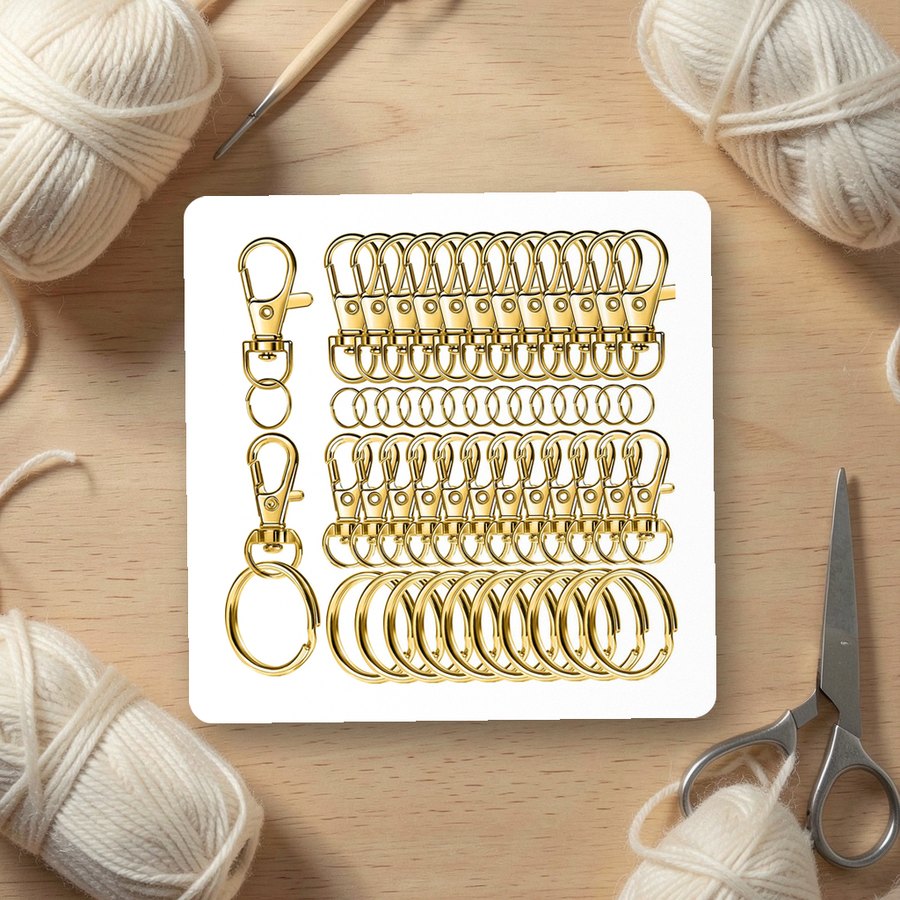 Swivel clasps with key ringsLEOBROSee it on Amazon
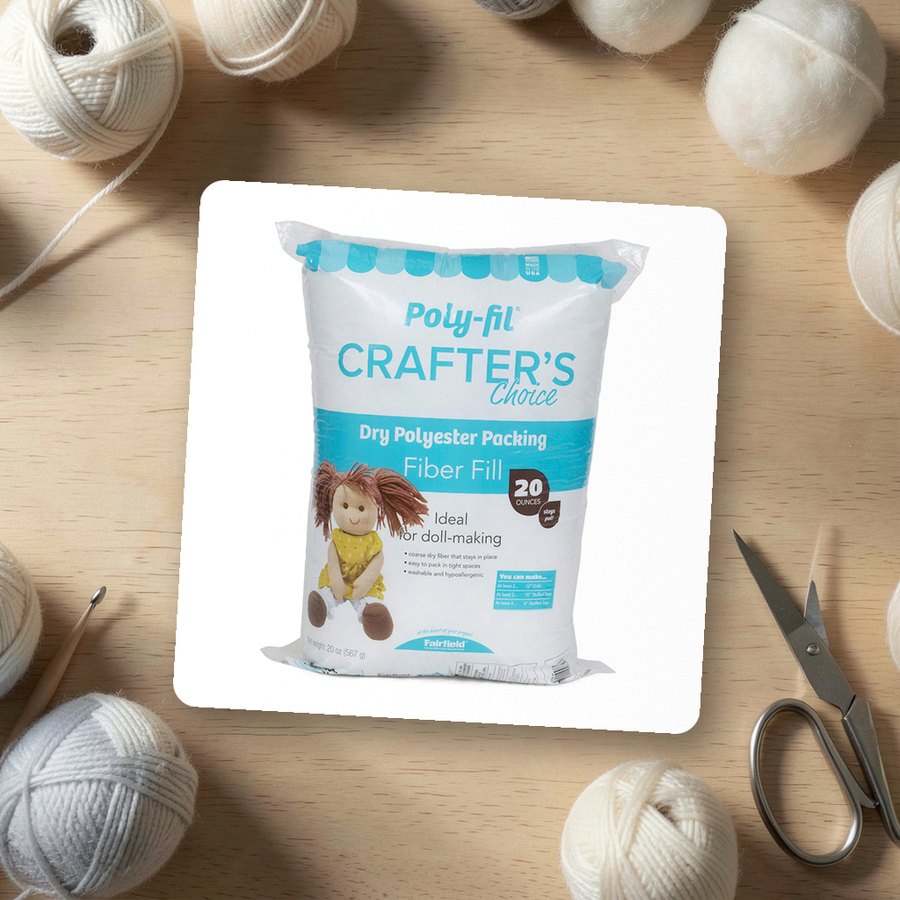 Polyester fiberfill stuffingPoly-FilSee it on Amazon
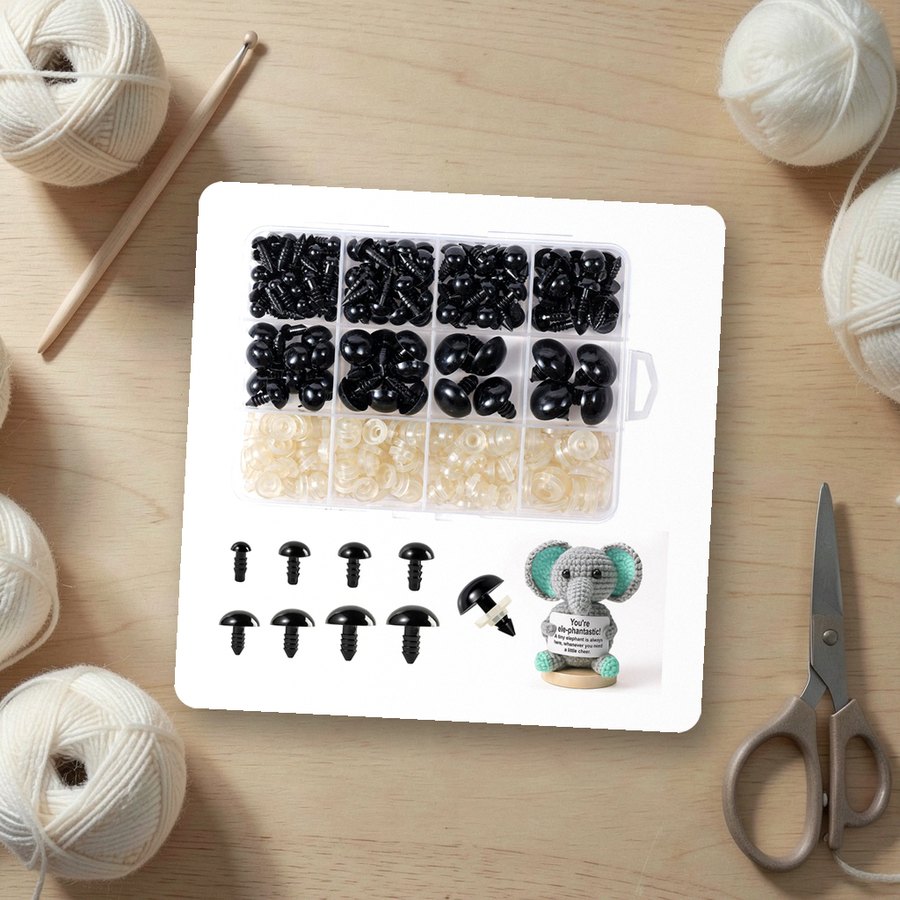 Safety eyes, 6 to 18 mmXKDOUSSee it on Amazon
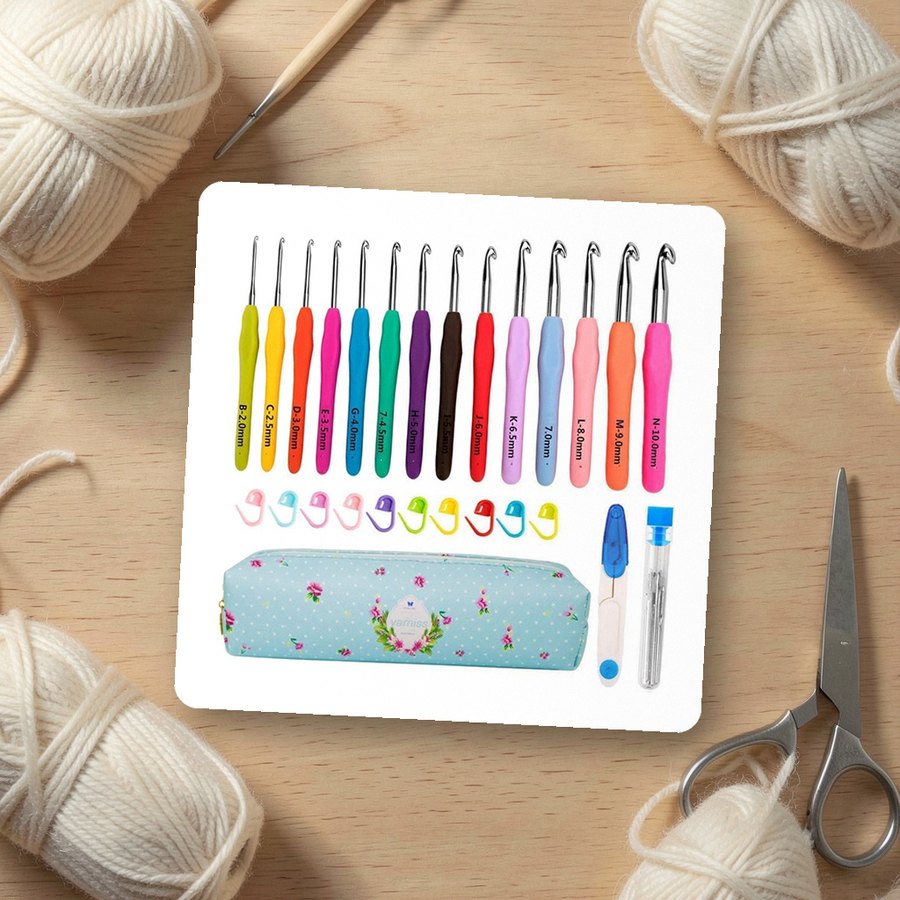 Ergonomic crochet hook set, 2 to 10 mmYarnissSee it on Amazon
As an Amazon Associate we earn from qualifying purchases.
Safety eyes are small parts, so a keychain that has them is not for a baby or a toddler.
Make the First One
Pick a shape with one or two parts, such as a piece of fruit or a heart, and make it in cotton with a hook one size smaller than feels natural. If the spiral, the magic ring or the decrease is new to you, read how to read a crochet pattern first. Then attach the ring with a crocheted loop, hang the result on your own keys for two weeks, and see what loosens. Whatever does is what to reinforce on the next one.
Patterns Mentioned in This Guide
 Crochet Keychains11 hand-picked · open the collection →
 Crochet Appliques & Bows13 hand-picked · open the collection →